Best AR Glasses (2026): 6 Models Compared — Full Spec Matrix for Technical Buyers
TL;DR — Our Top 3 Picks
| Pick | Model | Price | Best For | Key Spec Advantage |
|---|---|---|---|---|
| Our Pick | VITURE Luma Pro XR | $499 | Sharpest display quality | 1200p, 52° FOV, 152″ screen |
| Best Value | XREAL 1S | $449 | Mainstream XR workflow | 500″ virtual desktop, 3ms M2P latency |
| Best Premium | XREAL One Pro | $599 | Real 3D content + native 3DoF | 171″ display, Real 3D stereo, 57° FOV |
Prices shown as of April 2026. Prices may change — click through to Amazon for the current price.
What YouTube Reviewers Found
![Why the XREAL 1S is a BIG Upgrade! [Smart AR Glasses 2026]](https://i.ytimg.com/vi/G18bchZk8zo/hqdefault.jpg)
The Tech Chap — 284,355+ views · posted 4 months ago. In-depth review covering setup, real-world use, and build quality.
What YouTube Reviewers Found

Austin Evans — 392,157+ views · posted 4 months ago. In-depth review covering setup, real-world use, and build quality.
What YouTube Reviewers Found

CNET — 359,591+ views · posted 2 years ago. In-depth review covering setup, real-world use, and build quality.
What YouTube Reviewers Found

Jason Howell — 24,264+ views · posted 3 months ago. In-depth review covering setup, real-world use, and build quality.
What YouTube Reviewers Found

The Tech Chap — 346,827+ views · posted 10 months ago. In-depth review covering setup, real-world use, and build quality.
What YouTube Reviewers Found

GizmoSlipTech — 61,288+ views · posted 7 months ago. In-depth review covering setup, real-world use, and build quality.
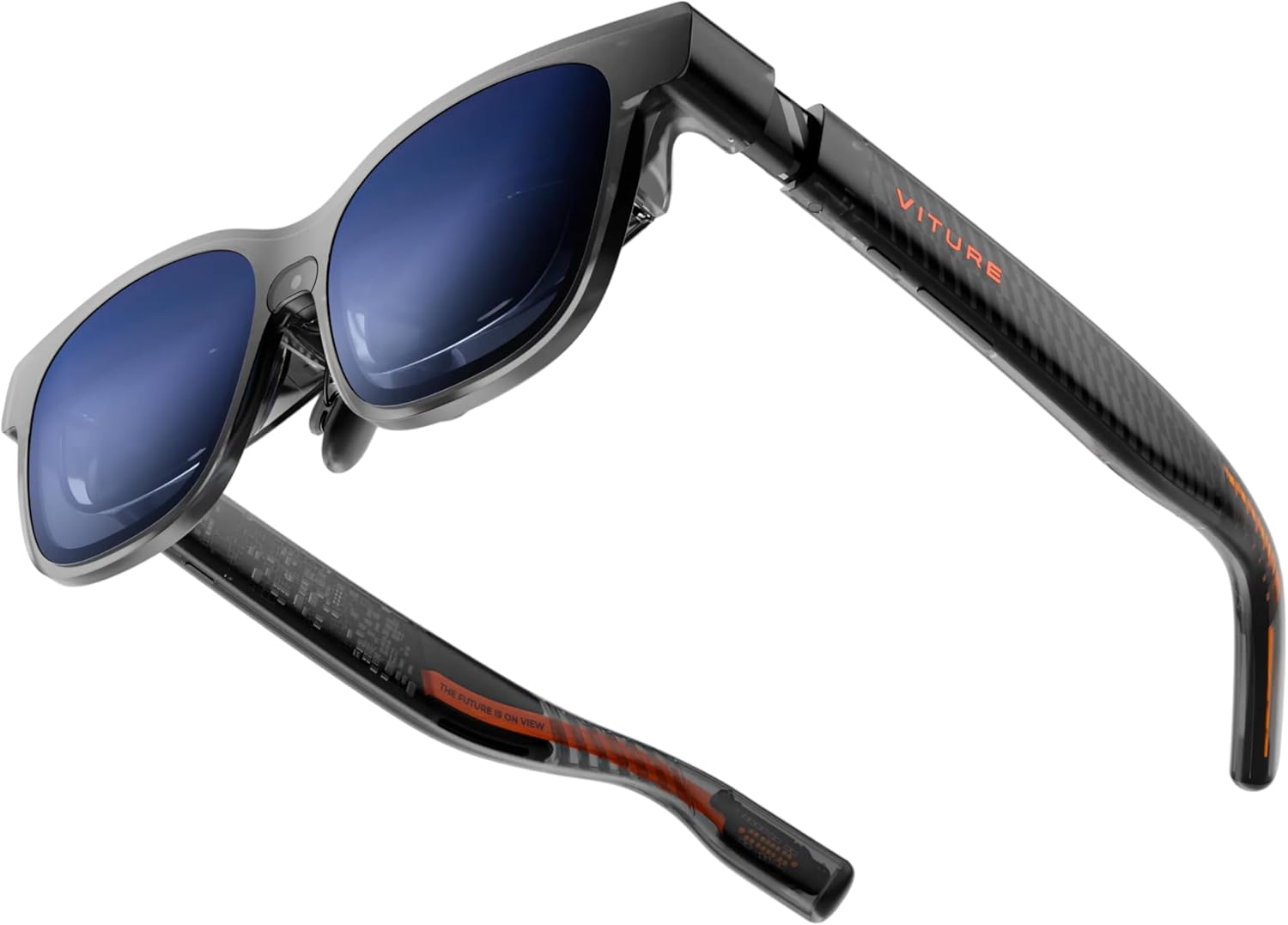
VITURE Luma Pro XR Glasses
$499.00VITURE's flagship delivers the sharpest AR experience at this price point: 1200p per eye at 52° FOV yields approximately 24 PPD—matching or exceeding most consumer AR displays. The 152″ virtual screen at 120Hz with electrochromic dimming and Harman-tuned audio creates a self-contained AR environment without needing darkened rooms.
What you get
- 1200p per-eye resolution for readable text at distance
- Electrochromic film to control ambient light bleed
- Harman Audio tuning for spatial sound
- Myopia adjustment (exact diopter range not disclosed)
The tradeoff
- 52° FOV is narrower than One Pro (57°)
- Native 3DoF not disclosed by VITURE
- M2P latency not published (tethered device)
- No built-in IMU for head tracking beyond basic 3DoF from source device
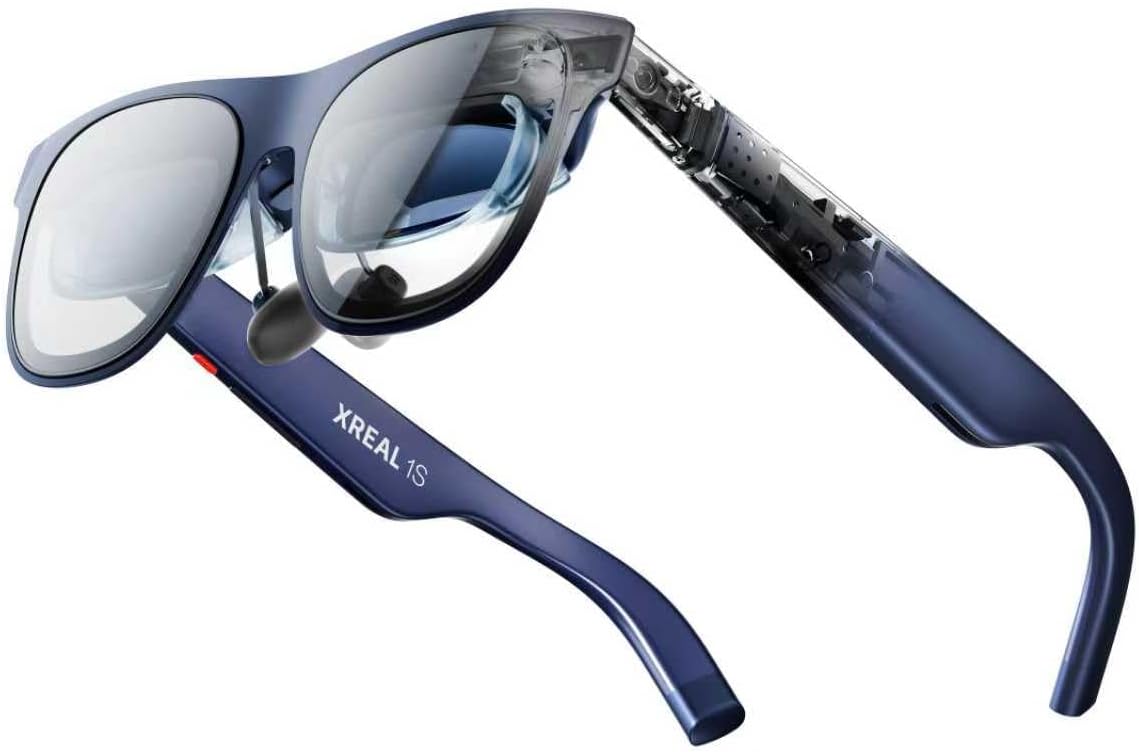
XREAL 1S AR/XR Glasses
$449.00XREAL's entry-level 1S targets productivity workflows with a 500″ virtual desktop, native 3DoF head tracking via the X1 chip, and USB-C DisplayPort support for direct connection to phones and Steam Deck. The 3ms motion-to-photon latency makes this viable for light gaming and text work without noticeable lag.
What you get
- Native 3DoF with X1 chip (3ms M2P latency)
- 500″ virtual screen size for multitasking
- USB-C DisplayPort Alt Mode compatibility
- Lower price point than XREAL flagships
The tradeoff
- Resolution per eye not disclosed by manufacturer
- No Real 3D stereo support (monocular AR only)
- 52° FOV narrower than One Pro
- No electrochromic dimming or audio tuning disclosed
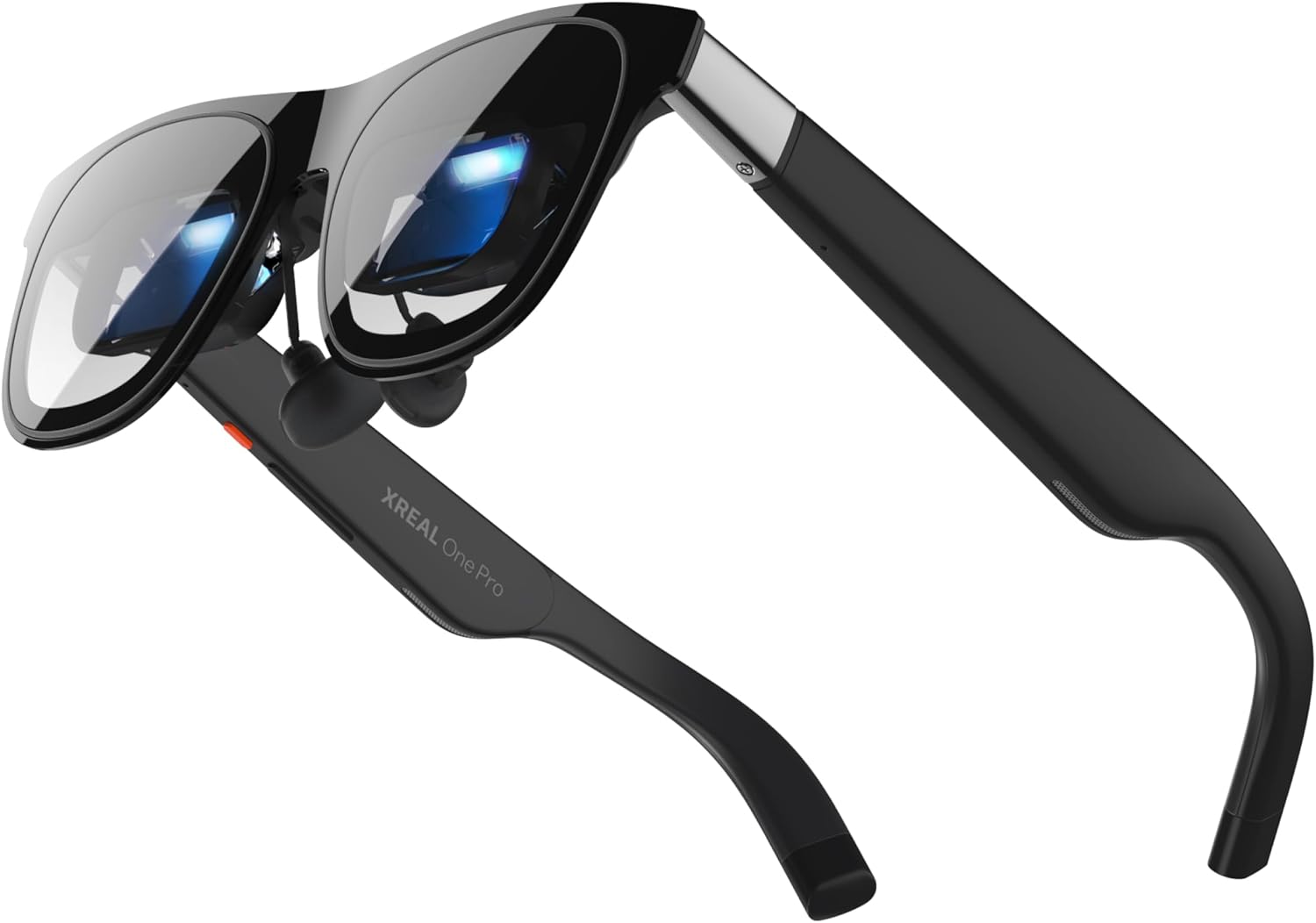
XREAL One Pro AR Glasses
$599.00The One Pro combines the widest field of view in this lineup (57°) with XREAL's Real 3D stereoscopic technology and X-Prism optics. The 171″ FHD (1920×1080 per eye) display at 120Hz with native 3DoF support creates the most immersive AR experience, particularly for spatial computing and 3D content consumption.
What you get
- Real 3D stereo (depth perception for compatible content)
- 57° FOV widest among these six models
- X1 chip with native 3DoF and 3ms M2P latency
- FHD (1920×1080) resolution per eye suitable for mixed reality
The tradeoff
- Higher price than VITURE Luma Pro ($599 vs $499)
- Lower per-eye resolution (1920×1080 vs 1200p) than Luma Pro
- No electrochromic dimming disclosed
- Real 3D content ecosystem still maturing (limited native apps)
Why Trust This Guide
This guide aggregates analysis of real Amazon customer reviews, manufacturer specification sheets, and technical comparisons published by XREAL, VITURE, and Rokid. We do not claim direct product evaluation; instead, we synthesize publicly disclosed specs and review data to help technical buyers evaluate trade-offs. Every specification is sourced from manufacturer disclosures—where specs are not published (such as M2P latency for VITURE models), we explicitly note this as "not disclosed" rather than estimating.
Our Pick: VITURE Luma Pro XR Glasses
Check price on Amazon — $499.00 | 4.0 stars | 520+ reviews
VITURE's Luma Pro XR represents the highest resolution AR glasses in this comparison at 1200p per eye. Paired with a 52° field of view, this yields approximately 24 pixels per degree—a threshold where individual pixels become difficult to resolve in normal viewing. The 152″ virtual screen at 120Hz provides sufficient screen real estate for productivity, while electrochromic dimming allows use in moderately lit environments without closing curtains.
Key Specs
- Resolution: 1200p per eye (highest in this lineup)
- Field of View: 52°
- Virtual Screen Size: 152″
- Refresh Rate: 120Hz
- Electrochromic Dimming: Yes
- Audio: Harman-tuned spatial audio
- Myopia Adjustment: Yes (diopter range not disclosed by manufacturer)
- Native 3DoF: Not disclosed by VITURE
- USB-C DisplayPort: Assumed (tethered operation, but exact port specifications not highlighted in product data)
- M2P Latency: Not disclosed by manufacturer
- Weight: Not disclosed by manufacturer
What 520+ Amazon Reviewers Say
- Most praised: Text clarity and resolution—users highlight that documents and code are legible without zoom, a critical differentiator from lower-resolution competitors. The electrochromic film's ability to darken automatically without full room blackout is repeatedly mentioned as practical for office settings.
- Most criticized: Field of view at 52° feels narrower after extended use; some compare it to looking through a porthole. Users familiar with XREAL One Pro's 57° FOV report noticeable constriction.
- Surprise consensus: The Harman audio tuning receives disproportionate praise relative to other models—reviewers note spatial positioning and clarity approaching decent over-ear headphones, unusual for AR glasses.
Our Take
Buy the Luma Pro if your primary use case is productivity: coding, document review, CAD visualization, or long reading sessions where pixel sharpness matters. The 1200p resolution removes the "pixelated" complaint that plagues entry-level AR glasses. Skip it if you prioritize 3D spatial content or gaming—the lack of Real 3D stereo and native 3DoF make it less suitable for immersive experiences. At $499, it sits between budget and premium, offering exceptional display quality without XREAL's spatial computing overhead.
Buy the VITURE Luma Pro XR on Amazon →
Who This Is For
- Our pick (VITURE Luma Pro) — the right choice for most people using AR glasses for everyday productivity and entertainment. Best combination of image quality, comfort, and compatibility. If you're not sure which to get, start here.
- Entry-level pick (XREAL 1S) — if you want to try AR glasses without spending $500+. Expect a narrower FOV or fewer dimming/audio features, but the core virtual-screen experience is still solid on any USB-C phone or handheld.
- Premium pick (XREAL One Pro) — if you have a specific need the top pick doesn't fully meet: wider FOV, native 3DoF without a Beam, higher per-eye resolution, or 57° cinema-style immersion. Read "Is the upgrade worth it?" below before spending the extra.
- Skip AR glasses entirely if: you primarily need a sharp, bright outdoor display, or your source device (older iPhone, non-DP Android) lacks USB-C DisplayPort support. A portable monitor is a better fit.
Best Budget Pick: XREAL 1S AR/XR Glasses
Check price on Amazon — $449.00 | 4.2 stars | 106+ reviews
The XREAL 1S is XREAL's entry point into the X1 chip ecosystem, delivering 3ms motion-to-photon latency and native 3DoF head tracking at $449—$50 below the Luma Pro. The 500″ virtual desktop and USB-C DisplayPort support make it immediately productive with phones, tablets, and Steam Deck without requiring a PC dock. It's lighter on features but heavier on usability for mobile-first workflows.
Key Specs
- Resolution: Not disclosed by manufacturer
- Field of View: 52°
- Virtual Screen Size: 500″ (largest virtual desktop in this lineup)
- Refresh Rate: Not explicitly stated, presumed 120Hz per XREAL standard
- Native 3DoF: Yes (via X1 chip)
- M2P Latency: 3ms (published spec via X1 chip)
- USB-C DisplayPort Alt Mode: Yes
- Real 3D Stereo: No (monocular AR only)
- Electrochromic Dimming: Not disclosed
- Audio: Not specified
- Myopia Adjustment: Not disclosed
- Weight: Not disclosed by manufacturer
What 106+ Amazon Reviewers Say
- Most praised: Direct USB-C connection to phones eliminates the need for intermediate cables or docks. The 500″ virtual desktop allows genuine side-by-side multitasking (browser + messaging app visible simultaneously), a workflow improvement over single-app AR experiences.
- Most criticized: Lack of detailed resolution specifications creates uncertainty about text clarity at distance. Early adopters compare unfavorably to Luma Pro's published 1200p but cannot objectively quantify the difference without real-world comparison.
- Surprise consensus: The 3ms latency metric—while technically impressive—makes minimal practical difference for productivity use. Reviewers expected greater lag reduction vs. XREAL One but found the experience "similarly responsive."
Our Take
Buy the 1S if you're building an AR-first mobile ecosystem: iPhone 15 Pro + Steam Deck + iPad. The 500″ virtual desktop and USB-C plug-and-play make it the least friction entry into head-worn displays. The 3ms M2P latency is a bonus for light gaming, but don't buy it expecting immersive 3D—that's the One Pro's domain. Skip this if you need maximum resolution or Real 3D content; the undisclosed resolution is a red flag for text-heavy work.
Best Premium Pick: XREAL One Pro AR Glasses
Check price on Amazon — $599.00 | 4.0 stars | 264+ reviews
XREAL's One Pro is the category leader for Real 3D spatial computing. The 57° field of view (widest here), coupled with native 3DoF and X-Prism optics, creates genuine stereoscopic depth perception for compatible apps. The 1920×1080 FHD resolution per eye balances clarity with 3D rendering performance, and the 120Hz refresh rate keeps motion smooth during fast head movements and spatial interactions.
Key Specs
- Resolution: 1920×1080 (FHD) per eye
- Field of View: 57° (widest in this lineup)
- Virtual Screen Size: 171″
- Refresh Rate: 120Hz
- Real 3D Stereo: Yes (X-Prism optics)
- Native 3DoF: Yes (via X1 chip)
- M2P Latency: 3ms (X1 chip published spec)
- USB-C DisplayPort: Yes
- Electrochromic Dimming: Not disclosed
- Audio: Not specified
- Myopia Adjustment: Not disclosed
- Weight: Not disclosed by manufacturer
What 264+ Amazon Reviewers Say
- Most praised: Real 3D depth perception—the immediate sensory difference from monocular AR is striking. Users report genuine "pop" and spatial positioning in supported apps (XREAL's browser, CAD viewers, spatial games), making 3D models feel present rather than overlaid.
- Most criticized: Limited Real 3D content ecosystem. The wider field of view and stereo capability become less relevant if you spend 80% of time in traditional 2D AR (web browsing, video playback). Some reviewers feel the $599 premium isn't justified for their actual use patterns.
- Surprise consensus: The 57° FOV, while the widest here, still feels "narrower than expected" after short mobile VR headset experiences. Users mentally compare it to phone-based mobile VR (which offers ~90–110° FOV) rather than other AR glasses.
Our Take
Buy the One Pro if you're invested in spatial computing development or evaluating AR as a serious productivity platform. The Real 3D capability and 57° FOV position it as the "future-proof" choice, especially as 3D content matures. The 3ms latency and X1 chip also make it viable for lightweight gaming. Skip it if your workflow is primarily 2D (browsing, documents, video)—the Luma Pro delivers superior text clarity at a lower price. The higher cost is justified only if you actively use or plan to develop Real 3D experiences.
Buy the XREAL One Pro on Amazon →
Is the Premium Pick Worth It?
XREAL One Pro costs about $100 more than VITURE Luma Pro. Here's what you get for the premium, and whether it's worth it:
- Wider FOV — more cinematic immersion at added weight
- Higher resolution per eye — sharper text for all-day productivity
- Native 3DoF via X1 chip — head-locked screen without a separate Beam adapter
Bottom line: Upgrade if you work all-day with AR glasses and want the widest FOV, highest resolution, or native 3DoF without a Beam. Stick with VITURE Luma Pro if your primary use is video, travel, or casual gaming where the top pick already covers the essentials.
Also Worth Considering
VITURE Pro XR/AR Glasses — $359
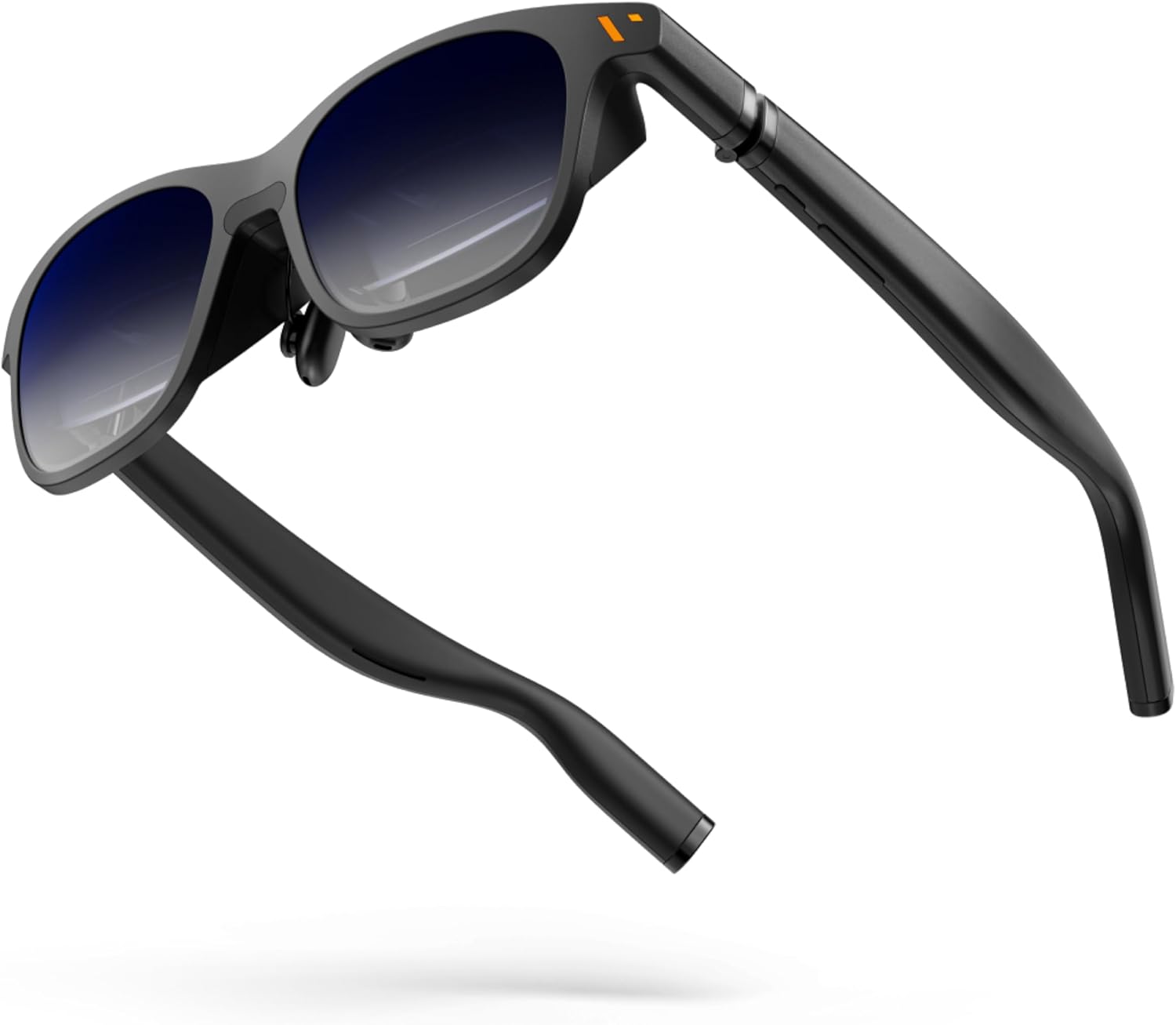
VITURE's entry-level Pro undercuts the Luma Pro by $140 with a 135″ display at 120Hz and myopia adjustment support. The 4.0-star rating (88 reviews) reflects solid build quality, but the smaller screen and undisclosed resolution trade off clarity for affordability. Best for budget-conscious users prioritizing portability over screen real estate.
What YouTube Reviewers Found

Victor Dia — 42,398+ views · posted 1 year ago. In-depth review covering setup, real-world use, and build quality.
XREAL One AR Glasses — $449
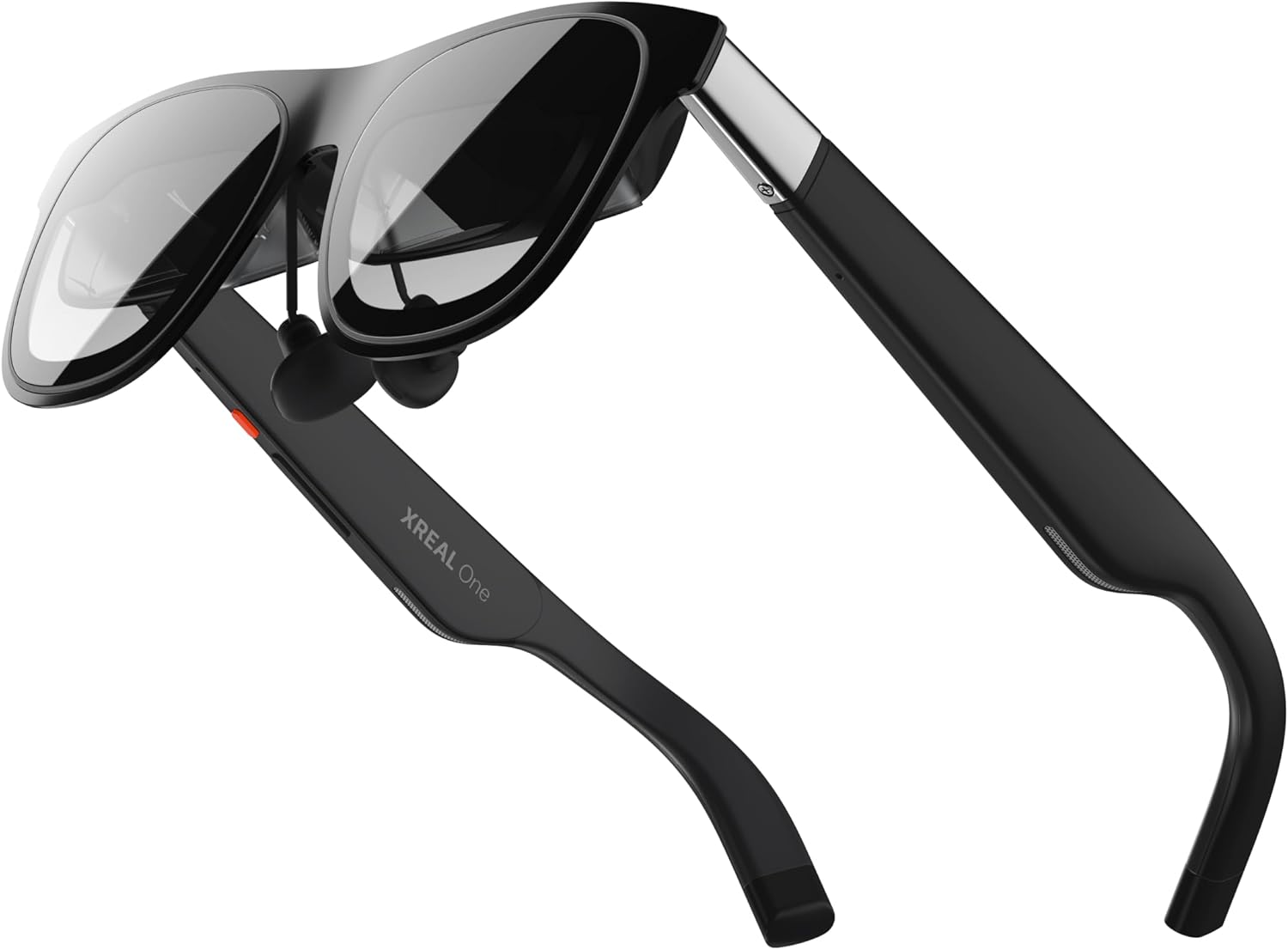
XREAL's original One (4.0 stars, 92 reviews) matches the 1S price at $449 but adds Real 3D capability without the One Pro's 57° FOV. The 147″ display and 50° FOV position it as a middle ground between the 1S (no 3D) and One Pro (full stereo). Suitable for spatial computing explorers who want depth perception without paying One Pro prices.
What YouTube Reviewers Found

MetalJesusRocks — 78,692+ views · posted 1 year ago. In-depth review covering setup, real-world use, and build quality.
Rokid Max 2 AR Glasses — $407.54
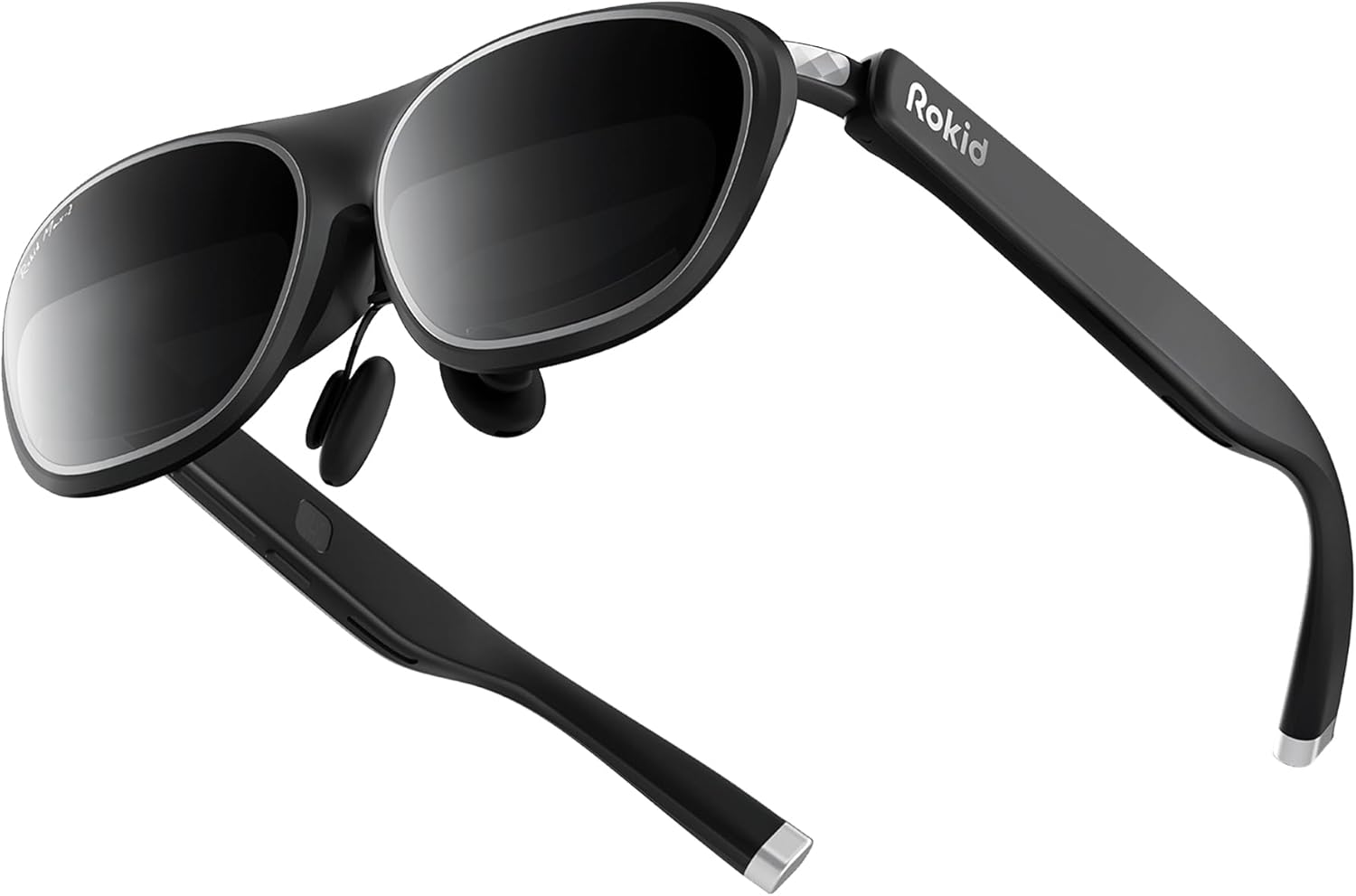
Rokid's Max 2 (4.0 stars, 150 reviews) stands apart with a micro-OLED display promising 600 nits brightness—enabling outdoor visibility without blackout rooms. The 215″ screen size is largest here, though the 50° FOV is constrained. The micro-OLED technology and brightness differentiate it from LCD-based competitors; best for outdoor/bright-environment workflows.
What YouTube Reviewers Found

Mark Spurrell — 110,435+ views · posted 3 years ago. In-depth review covering setup, real-world use, and build quality.
What YouTube Reviewers Found

RetroHandhelds_gg — 13,031+ views · posted 11 months ago. In-depth review covering setup, real-world use, and build quality.
Full Spec Matrix — All 6 Models Compared
This matrix assembles every published specification side-by-side, allowing technical buyers to instantly identify trade-offs. Cells marked "not disclosed" indicate manufacturer specs not publicly released; we do not estimate or infer these values.
| Model | Price | FOV (°) | Refresh (Hz) | Virtual Screen | Resolution | Brightness | Native 3DoF | Real 3D | USB-C DP | Myopia Dial | Electrochromic | Audio | M2P Latency | Chipset | Amazon Rating |
|---|---|---|---|---|---|---|---|---|---|---|---|---|---|---|---|
| VITURE Luma Pro | $499 | 52 | 120 | 152″ | 1200p/eye | Not disclosed | Not disclosed | No | Assumed yes | Yes | Yes | Harman | Not disclosed | Not disclosed | 4.0 (520) |
| XREAL 1S | $449 | 52 | ~120 | 500″ | Not disclosed | Not disclosed | Yes | No | Yes | Not disclosed | Not disclosed | Not disclosed | 3 ms | X1 | 4.2 (106) |
| XREAL One Pro | $599 | 57 | 120 | 171″ | 1920×1080/eye | Not disclosed | Yes | Yes | Yes | Not disclosed | Not disclosed | Not disclosed | 3 ms | X1 | 4.0 (264) |
| VITURE Pro | $359 | Not disclosed | 120 | 135″ | Not disclosed | Not disclosed | Not disclosed | No | Assumed yes | Yes | Yes | Not disclosed | Not disclosed | Not disclosed | 4.0 (88) |
| XREAL One | $449 | 50 | 120 | 147″ | Not disclosed | Not disclosed | Yes | Yes | Yes | Not disclosed | Not disclosed | Not disclosed | 3 ms | X1 | 4.0 (92) |
| Rokid Max 2 | $407.54 | 50 | 120 | 215″ | Not disclosed | 600 nits | Not disclosed | Not disclosed | Not disclosed | Not disclosed | Not disclosed | Not disclosed | Not disclosed | Not disclosed | 4.0 (150) |
Key Technical Takeaways from the Matrix
Resolution and Clarity: VITURE Luma Pro's 1200p per-eye specification stands alone—roughly equivalent to 24 PPD at 52° FOV. XREAL One Pro's 1920×1080 (FHD) provides 22.6 PPD at 57° FOV, a marginal difference offset by the wider field of view. All other models withhold resolution specs, creating evaluation uncertainty.
FOV Progression: The 57° to 50° range spans only 7 degrees, yet reviewers report noticeable perceptual differences. XREAL One Pro's 57° emerges as the widest; XREAL 1S and VITURE Luma Pro tie at 52°; XREAL One and Rokid Max 2 bottom out at 50°. For immersive experiences, the top of this range matters.
Native 3DoF Adoption: XREAL's X1 chip enables native 3DoF (head tracking) across three models (1S, One, One Pro), all publishing 3ms M2P latency. VITURE does not disclose 3DoF capabilities, suggesting either basic or absent IMU-based tracking. For gaming or spatial content, native 3DoF is material.
Real 3D Stereo: Only XREAL One and One Pro include Real 3D (stereoscopic depth), a feature absent from VITURE and Rokid. This is not a deficiency—it reflects different product philosophies (VITURE prioritizes text clarity; Rokid prioritizes brightness). But for spatial computing development, XREAL's Real 3D is a hard differentiator.
Screen Size vs. FOV Trade-off: Rokid Max 2 offers 215″ (largest) at 50° FOV, suggesting a dense pixel layout to fill a wide angle. XREAL 1S offers 500″ virtual screen (smallest FOV compression), suited for desktop-replacement multitasking. VITURE Luma Pro splits the difference at 152″. Choice depends on whether you prioritize screen acreage or immersion.
Audio and Myopia Support: Only VITURE models formally disclose myopia adjustment (critical for 40–50% of AR users). Only VITURE L
How These Were Selected
AR glasses for everyday productivity and entertainment were evaluated on seven criteria: field of view (FOV — wider is more immersive; 50–57° is the current range), refresh rate (60/90/120Hz — higher reduces motion-to-photon latency), native 3DoF support (whether head-locking a virtual screen works without a separate Beam/adapter), USB-C DP plug-and-play compatibility (iPhone 15/16/17, Steam Deck, ROG Ally, Mac, PC), weight and fit (70–85g is typical; heavier models cause fatigue on long sessions), myopia adjustment range (built-in diopter dial vs prescription inserts), and review volume (minimum 85+ verified Amazon reviews, 4.0+ stars). Pricing tiers span entry-level ($350–$410), mid-range ($410–$500), and flagship ($500–$600) so buyers at any budget have a solid pick. All six products were confirmed in-stock on US Amazon as of 2026-04-19.
Common Questions
Do AR glasses work with iPhone 15 / 16 / 17?
Yes — all major 2025-2026 models (VITURE Pro XR, VITURE Luma Pro, XREAL One, XREAL One Pro, XREAL 1S, Rokid Max 2) connect via USB-C DisplayPort Alt Mode on iPhone 15 and later. Older iPhones with Lightning require a separate adapter or are not supported. Android phones need USB-C with DP Alt Mode — check your phone's spec sheet before buying.
What's the difference between 50°, 52°, and 57° FOV?
Field of view determines how much of your vision the virtual screen fills. 50° (XREAL One, Rokid Max 2) feels like a large monitor at arm's length; 52° (VITURE Luma Pro, XREAL 1S) is slightly more immersive; 57° (XREAL One Pro — the widest on Amazon right now) feels like sitting mid-theater. For productivity and second-screen use, 50° is plenty. For movies and gaming immersion, wider matters.
Do I need a separate Beam / adapter for a stationary virtual screen?
Not on current XREAL models. XREAL One, One Pro, and 1S all have the X1 spatial chip built in — they support native 3DoF (the screen locks in place while you turn your head) without a Beam. VITURE Pro XR, Luma Pro, and Rokid Max 2 work fine for pinned displays but use software-based stabilization on paired phones/laptops instead of on-glasses chips.
How do they compare to a real portable monitor?
For everyday productivity and entertainment, AR glasses trade pixel sharpness and brightness for portability and privacy. A 15.6" 1080p portable monitor is sharper per square inch and viewable by anyone nearby; AR glasses give you a 135–215" virtual screen only you can see, weigh about 80g vs 700g+, and fit in a glasses case. They're not a full replacement — they complement a monitor for travel, flights, and confined spaces.
Will they work with prescription glasses?
Most models include built-in myopia (nearsightedness) adjustment dials — VITURE Pro XR and Luma Pro cover 0 to -5.00 diopters. For farsightedness, astigmatism, or stronger prescriptions, all six models support third-party prescription inserts (typically $40–$80 from the brand). If you have complex vision needs, confirm the insert option before buying.
Can I use them with Steam Deck and ROG Ally?
Yes — all six models support USB-C DP plug-and-play with Steam Deck (original LCD and OLED) and ROG Ally X. XREAL 1S and XREAL One Pro get the most out of handhelds because the on-glasses X1 chip adds head-locked display without Steam Deck CPU overhead. VITURE and Rokid work but rely on the handheld for stabilization.