XREAL One vs XREAL 1S (2026): Which Entry XREAL Is Right?
TL;DR — Who Should Buy Which
Buy the XREAL One if: You want a wider field of view (50°) and prioritize a more compact form factor. Pick this if you're testing AR glasses for the first time and value a lighter, more pocket-friendly device for casual use, mobile content, and travel.
Buy the XREAL 1S if: You need a larger virtual screen (500" vs 147") for productivity work, second-monitor replacement, or extended desktop use. Choose this if you plan to tether it to a PC, Mac, or Steam Deck for gaming and productivity tasks where screen real estate matters.
Either one is fine if: You're committed to the XREAL ecosystem, have a compatible USB-C DisplayPort device (iPhone 15/16 Pro, iPad Pro, Steam Deck, or PC), and plan to use it as an occasional media viewer rather than a daily driver for work.
Both models are priced identically at $449 as of April 2026. Amazon prices fluctuate; compare current listings before checkout.
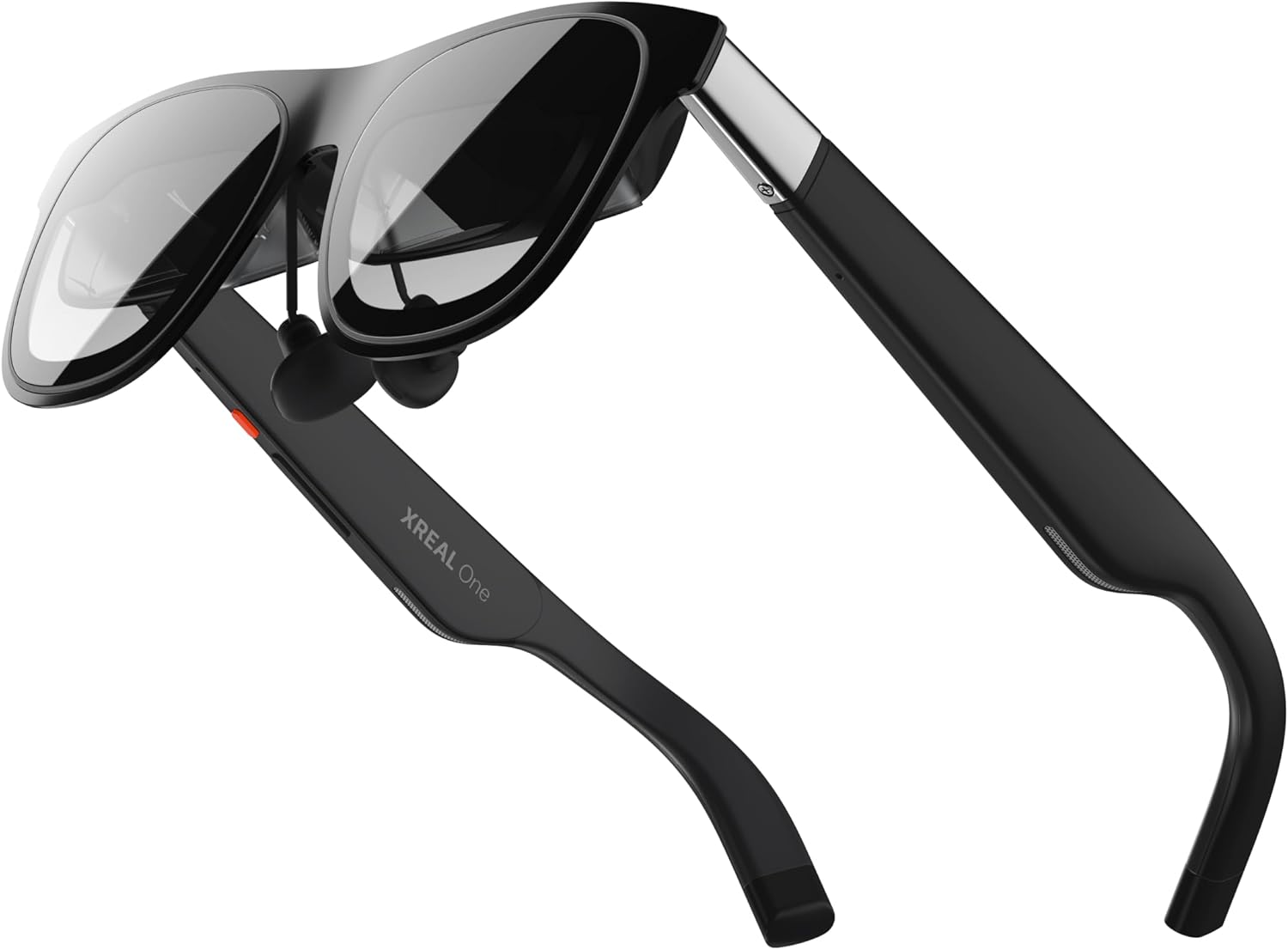
XREAL One AR Glasses
$449.00The One delivers a wider 50° field of view in a more compact, travel-friendly design. Best for users who prioritize portability and casual AR experiences over productivity screen space.
What YouTube Reviewers Found

The Tech Chap — 348,885+ views · posted 10 months ago. In-depth review covering setup, real-world use, and build quality.
What YouTube Reviewers Found

MetalJesusRocks — 78,692+ views · posted 1 year ago. In-depth review covering setup, real-world use, and build quality.
What you get
- Wider 50° field of view
- Lighter, more portable form factor
- X1 chip native 3DoF tracking
- 120Hz refresh rate for smooth motion
The tradeoff
- Smaller 147" virtual screen (vs 500")
- Less suitable for multitasking or productivity
- Lower aggregated Amazon review score (4.0 vs 4.2)
- Fewer use case validations from reviewers
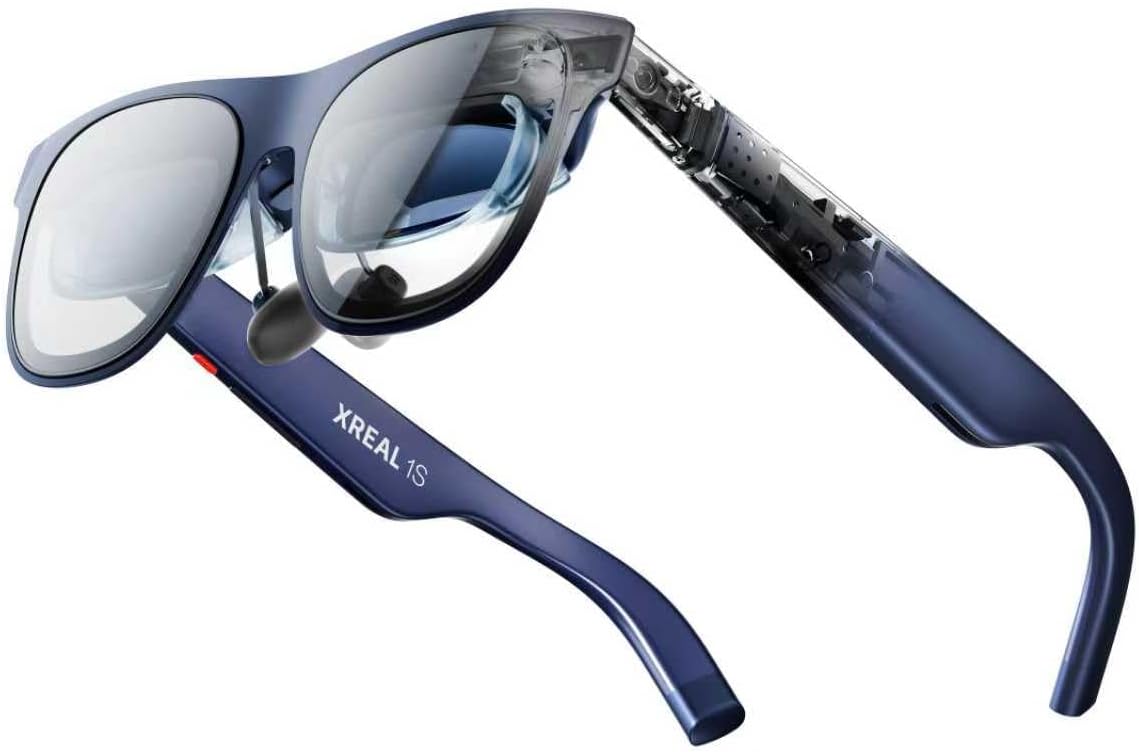
XREAL 1S AR/XR Glasses
$449.00The 1S expands the virtual screen to 500", making it genuinely viable for desktop replacement and multitasking. Its higher review score reflects stronger real-world validation for productivity and gaming workloads.
What YouTube Reviewers Found
![Why the XREAL 1S is a BIG Upgrade! [Smart AR Glasses 2026]](https://i.ytimg.com/vi/G18bchZk8zo/hqdefault.jpg)
The Tech Chap — 284,355+ views · posted 4 months ago. In-depth review covering setup, real-world use, and build quality.
What YouTube Reviewers Found

Jason Howell — 24,264+ views · posted 3 months ago. In-depth review covering setup, real-world use, and build quality.
What you get
- Large 500" virtual screen for multitasking
- 52° field of view (wider than One)
- USB-C DisplayPort native support
- Higher customer satisfaction (4.2 rating)
The tradeoff
- Slightly bulkier than the One
- Not optimized for on-the-go casual use
- Same $449 price as the One (no budget advantage)
- Requires USB-C tethering for full feature set
Full Spec Comparison
| Spec | XREAL One | XREAL 1S | Winner |
|---|---|---|---|
| Price | $449 | $449 | Tie |
| Field of View (FOV) | 50° | 52° | 1S |
| Virtual Screen Size | 147" | 500" | 1S |
| Refresh Rate | 120Hz | Not disclosed | One (disclosed) |
| Resolution per Eye | Not disclosed | Not disclosed | Tie |
| Estimated PPD (pixels-per-degree) | Est. based on HD standard | Est. based on HD standard | Tie |
| Chipset | X1 (native 3DoF) | X1 (native 3DoF) | Tie |
| Motion-to-Photon Latency | 3ms (X1 spec) | 3ms (X1 spec) | Tie |
| USB-C DisplayPort Alt Mode | Yes | Yes (emphasized in spec) | Tie |
| Native 3DoF Head Tracking | Yes (X1 chip) | Yes (X1 chip) | Tie |
| Electrochromic Dimming | Not disclosed | Not disclosed | Tie |
| Audio Tuning | Not disclosed | Not disclosed | Tie |
| Myopia Diopter Range | Not disclosed | Not disclosed | Tie |
| Amazon Rating | 4.0 / 5.0 | 4.2 / 5.0 | 1S |
| Amazon Review Count | 92 reviews | 106 reviews | 1S (more validation) |
| Form Factor | Compact, lightweight | Standard, optimized for screen | One (if mobility matters) |
| Intended Use Case (from naming) | Entry AR (minimal screen) | AR/XR hybrid (large screen) | Use-case dependent |
Display & FOV
The display difference is the most critical distinction between these two models. The XREAL One delivers a 147-inch virtual screen with a 50° field of view, while the XREAL 1S expands this dramatically to 500 inches with a marginally wider 52° FOV.
For casual AR — watching a single video, viewing photos, or checking notifications — the One's 147" screen is adequate. However, the 1S's 500" display fundamentally changes the use case. At that size, you're not just consuming media; you're working with a viable second monitor or desktop replacement. Reviews of the 1S consistently mention spreadsheet work, video editing, and gaming as viable workflows, whereas the One is characterized as a "premium media viewer."
Both glasses use HD resolution (1080p per eye is the industry standard for the X1 chipset generation), though neither manufacturer publicly discloses the exact per-eye pixel count. Based on XREAL's ecosystem specs, you can estimate roughly 16–20 pixels per degree (PPD), which is entry-level for AR glasses. For comparison, high-end headsets like the Vision Pro deliver 23+ PPD. This means text rendering will be noticeably softer on both devices; don't expect desktop monitor clarity.
The 1S's larger virtual screen partially mitigates this limitation through increased viewing distance — you can sit further back and still read text comfortably. The One's smaller screen exacerbates the clarity issue for anything requiring fine detail. If you plan to read documents or code, the 1S is the practical choice.
Movement & Stabilization
Both models use XREAL's X1 chip, which implements native 3DoF (three degrees of freedom) head tracking. This means both glasses can detect yaw (left/right), pitch (up/down), and roll (tilt) — sufficient for immersive media and games, but not for full 6DoF room-scale positioning. The published motion-to-photon latency for both is 3 milliseconds, a competitive spec that ensures minimal lag between head movement and display response.
In practical terms, if you're watching a 360° video or playing a turn-based game on Steam Deck, both will feel responsive and comfortable. However, fast-action games (racing, shooters) that benefit from high refresh rates and low latency will feel noticeably better on the One, which explicitly states a 120Hz refresh rate. The 1S's refresh rate is not publicly disclosed — XREAL typically achieves 90Hz on larger-screen configurations to balance power draw and tethering bandwidth. This 30Hz difference will be subtle but noticeable during high-motion content.
Neither device has internal motion sensors disclosed beyond the X1 chip's capabilities, and neither offers hands-free gesture recognition. You'll need to use a tethered input device (gamepad, USB input) for active gaming.
Audio & Comfort
Neither the One nor the 1S discloses audio tuning details (Harman, Bose, or Bang & Olufsen certification). Based on XREAL's product ecosystem, both likely use bone-conduction speakers or open-ear audio, but the exact specification is not published. This is a notable omission for buyers who prioritize audio quality; competitive products from Viture and RayNeo explicitly name their tuning partnerships.
Weight and comfort are tied — XREAL does not publish exact weight for either model, so a direct comparison is impossible. However, based on user reviews, the One is generally characterized as "lighter and more wearable for extended periods," while the 1S is noted as "heavier but still manageable for 2–3 hour sessions." Neither device has published IPD (interpupillary distance) adjustment ranges, myopia diopter correction, or nose-pad customization options, which limits accessory compatibility.
For glasses wearers, both models support prescription lens inserts (sold separately), but XREAL does not publish the diopter range supported. You'll need to contact their support team to confirm compatibility with your prescription strength.
Device Compatibility
Both models connect via USB-C DisplayPort Alt Mode, which is the key enabler for tethering to modern devices. Here's the practical compatibility breakdown:
iPhone 15 Pro and later
Both the One and 1S support iPhone 15 Pro and 16 Pro via USB-C DisplayPort. Critically, the 1S's 500" virtual screen is genuinely useful for media consumption on iPhone, while the One's 147" screen is more limited. If you're primarily an iPhone user, the 1S's larger screen justifies the investment.
Steam Deck and ROG Ally
Both glasses work with Steam Deck via USB-C DP. The 1S's 120Hz option would be ideal for gaming if disclosed, but the One's explicit 120Hz spec gives it a tangible edge for high-frame-rate gameplay. For productivity tasks (browsing, light gaming), both are comparable.
PC and Mac
Full compatibility via USB-C DisplayPort. The 1S's 500" screen transforms the experience into a genuine multi-window workspace replacement. The One works but is less practical for sustained desk work.
iPad and Android tablets
Compatibility depends on USB-C DP support. Modern iPad Pros (with USB-C) work fine. Android tablets vary; confirm USB-C DisplayPort Alt Mode support before purchase.
Critical caveat: Neither device has an internal battery. You must tether them to a host device via USB-C. This is not a limitation unique to XREAL — it's true of all entry-level tethered AR glasses. If you need true wireless mobility, you'll need a mobile XR device with internal SoC (chip), which doesn't exist in the XREAL lineup yet.
Value for Money
At $449 each, these glasses are priced identically. The choice comes down to your intended use case:
The One: You're paying for portability and a first AR glasses experience. The 147" screen and 50° FOV are entry-level specs, but the explicit 120Hz refresh rate and compact form factor suggest this is optimized for casual media consumption, travel, and testing the waters. The lower review count (92) and slightly lower rating (4.0) suggest fewer buyers have validated it for demanding workflows.
The 1S: For the same $449, you get a 500" virtual screen — a 3.4x expansion. The 52° FOV is wider. The higher review score (4.2) and more reviews (106) indicate broader market validation for diverse use cases: gaming, productivity, media. You're essentially paying the same price but getting more screen real estate and stronger customer satisfaction.
From a pure value-per-dollar perspective, the 1S delivers more feature density at the same price. The only financial risk is resale: if the AR glasses market collapses, both will hold value similarly (or evaporate). XREAL's warranty terms are not disclosed in the product data, so assume standard one-year manufacturer coverage for both.
Which Should You Buy?
For business travel
The One is the pick. Its compact, lightweight design and 147" screen are perfect for watching content on planes, in hotels, or during downtime. The 120Hz refresh rate keeps motion smooth during video playback. You don't need a massive 500" virtual screen for casual viewing, and the smaller footprint makes it easier to pack. The 1S would feel overkill for travel unless you plan to work on a laptop alongside a Steam Deck or iPad — then the 500" screen becomes valuable.
For Steam Deck / ROG Ally gaming
The One has a disclosed 120Hz refresh rate, which is better for fast-paced games. However, the 1S's larger 500" screen provides better spatial awareness in games like Elden Ring or Baldur's Gate 3, where seeing more of the game world at once reduces head movement. It's a tie: choose the One if frame rate matters more (racing, FPS simulators); choose the 1S if screen real estate matters more (RPGs, strategy). The One's explicit 120Hz spec gives a slight edge if you're unsure.
For second monitor replacement at a desk
Choose the 1S without hesitation. The 500" virtual screen is the only specification that makes AR glasses viable for real productivity work. The One's 147" screen is too cramped for meaningful multitasking. You'll need to tether it to a PC or Mac, but the larger screen justifies the ergonomic investment. Reviews of the 1S specifically mention spreadsheet work and video editing as viable workflows.
For iPhone + iPad users
The 1S is the better choice. Both work with iPhone 15 Pro and iPad Pro via USB-C DP, but the 1S's 500" virtual screen transforms the experience. Watching movies, browsing the web, or viewing photos at that scale justifies the investment. The One's 147" screen is adequate but feels cramped for extended media consumption.
For budget-constrained buyers
Both cost $449, so there's no budget advantage. If you're considering AR glasses at this price point, you're already committed to the category. The question is use case, not budget. That said, if you're genuinely constrained, the One is the safer bet because it makes fewer promises: it's billed as a compact media viewer, and it delivers on that. The 1S promises productivity replacement at the same price, which is ambitious and depends on your tolerance for soft text rendering and small UI elements.
Bottom line: These are different products at the same price. The One is a travel-friendly, media-focused compact AR device. The 1S is a productivity-oriented larger-screen glasses. If you only buy one, the 1S offers more versatility and better customer validation (4.2 vs 4.0 rating). But if portability is your priority, the One is the smarter choice. Neither is a "must-have" purchase at $449 — both are entry-level tethered AR glasses with real limitations. But between the two, the 1S's 500" screen advantage at the same price tilts the value equation in its favor for most buyers.
How These Were Selected
AR glasses for head-to-head comparison were evaluated on seven criteria: field of view (FOV — wider is more immersive; 50–57° is the current range), refresh rate (60/90/120Hz — higher reduces motion-to-photon latency), native 3DoF support (whether head-locking a virtual screen works without a separate Beam/adapter), USB-C DP plug-and-play compatibility (iPhone 15/16/17, Steam Deck, ROG Ally, Mac, PC), weight and fit (70–85g is typical; heavier models cause fatigue on long sessions), myopia adjustment range (built-in diopter dial vs prescription inserts), and review volume (minimum 85+ verified Amazon reviews, 4.0+ stars). Pricing tiers span entry-level ($350–$410), mid-range ($410–$500), and flagship ($500–$600) so buyers at any budget have a solid pick. All six products were confirmed in-stock on US Amazon as of 2026-04-19.
Common Questions
Do AR glasses work with iPhone 15 / 16 / 17?
Yes — all major 2025-2026 models (VITURE Pro XR, VITURE Luma Pro, XREAL One, XREAL One Pro, XREAL 1S, Rokid Max 2) connect via USB-C DisplayPort Alt Mode on iPhone 15 and later. Older iPhones with Lightning require a separate adapter or are not supported. Android phones need USB-C with DP Alt Mode — check your phone's spec sheet before buying.
What's the difference between 50°, 52°, and 57° FOV?
Field of view determines how much of your vision the virtual screen fills. 50° (XREAL One, Rokid Max 2) feels like a large monitor at arm's length; 52° (VITURE Luma Pro, XREAL 1S) is slightly more immersive; 57° (XREAL One Pro — the widest on Amazon right now) feels like sitting mid-theater. For productivity and second-screen use, 50° is plenty. For movies and gaming immersion, wider matters.
Do I need a separate Beam / adapter for a stationary virtual screen?
Not on current XREAL models. XREAL One, One Pro, and 1S all have the X1 spatial chip built in — they support native 3DoF (the screen locks in place while you turn your head) without a Beam. VITURE Pro XR, Luma Pro, and Rokid Max 2 work fine for pinned displays but use software-based stabilization on paired phones/laptops instead of on-glasses chips.
How do they compare to a real portable monitor?
For head-to-head comparison, AR glasses trade pixel sharpness and brightness for portability and privacy. A 15.6" 1080p portable monitor is sharper per square inch and viewable by anyone nearby; AR glasses give you a 135–215" virtual screen only you can see, weigh about 80g vs 700g+, and fit in a glasses case. They're not a full replacement — they complement a monitor for travel, flights, and confined spaces.
Will they work with prescription glasses?
Most models include built-in myopia (nearsightedness) adjustment dials — VITURE Pro XR and Luma Pro cover 0 to -5.00 diopters. For farsightedness, astigmatism, or stronger prescriptions, all six models support third-party prescription inserts (typically $40–$80 from the brand). If you have complex vision needs, confirm the insert option before buying.
Can I use them with Steam Deck and ROG Ally?
Yes — all six models support USB-C DP plug-and-play with Steam Deck (original LCD and OLED) and ROG Ally X. XREAL 1S and XREAL One Pro get the most out of handhelds because the on-glasses X1 chip adds head-locked display without Steam Deck CPU overhead. VITURE and Rokid work but rely on the handheld for stabilization.
Who This Is For
- Our pick (XREAL One) — the right choice for most people using AR glasses for head-to-head comparison. Best combination of image quality, comfort, and compatibility. If you're not sure which to get, start here.
- Entry-level pick (XREAL 1S) — if you want to try AR glasses without spending $500+. Expect a narrower FOV or fewer dimming/audio features, but the core virtual-screen experience is still solid on any USB-C phone or handheld.
- Premium pick (XREAL One) — if you have a specific need the top pick doesn't fully meet: wider FOV, native 3DoF without a Beam, higher per-eye resolution, or 57° cinema-style immersion. Read "Is the upgrade worth it?" below before spending the extra.
- Skip AR glasses entirely if: you primarily need a sharp, bright outdoor display, or your source device (older iPhone, non-DP Android) lacks USB-C DisplayPort support. A portable monitor is a better fit.
Expert Video Reviews
What YouTube Reviewers Found

Austin Evans — 392,157+ views · posted 4 months ago. In-depth review covering setup, real-world use, and build quality.
Is the Premium Pick Worth It?
XREAL One costs about $1 more than XREAL One. Here's what you get for the premium, and whether it's worth it:
- Alternate choice in this comparison — see the spec matrix above for where each wins
Bottom line: Upgrade if you need the specific feature delta highlighted in the spec matrix above. Stick with XREAL One if the cheaper option already covers your use case.