VITURE Luma Pro vs XREAL One Pro (2026): Flagship AR Glasses Compared
TL;DR — Who Should Buy Which
Buy the VITURE Luma Pro if: You prioritize a sharper display (1200p vs 1080p), prefer a lighter form factor, want electrochromic dimming built-in, and are willing to accept a narrower field of view. Best for desk-based content consumption and users who value visual clarity over immersion.
Buy the XREAL One Pro if: You want the widest possible field of view (57° vs 52°), value real 3D capability via the X1 chip, need motion-to-photon latency guarantees (3ms disclosed), and plan to use these for active gaming or dynamic content where responsiveness matters. The larger virtual screen (171" vs 152") is worth the extra $100 if immersion is your priority.
Either one is fine if: You're using these as a portable second display for productivity, connecting to an iPhone or iPad, or need a tethered AR experience without demanding high-refresh-rate gaming performance. Both support USB-C DisplayPort and deliver solid audio via reputable brands.
Prices shown as of April 2026. Amazon prices fluctuate.
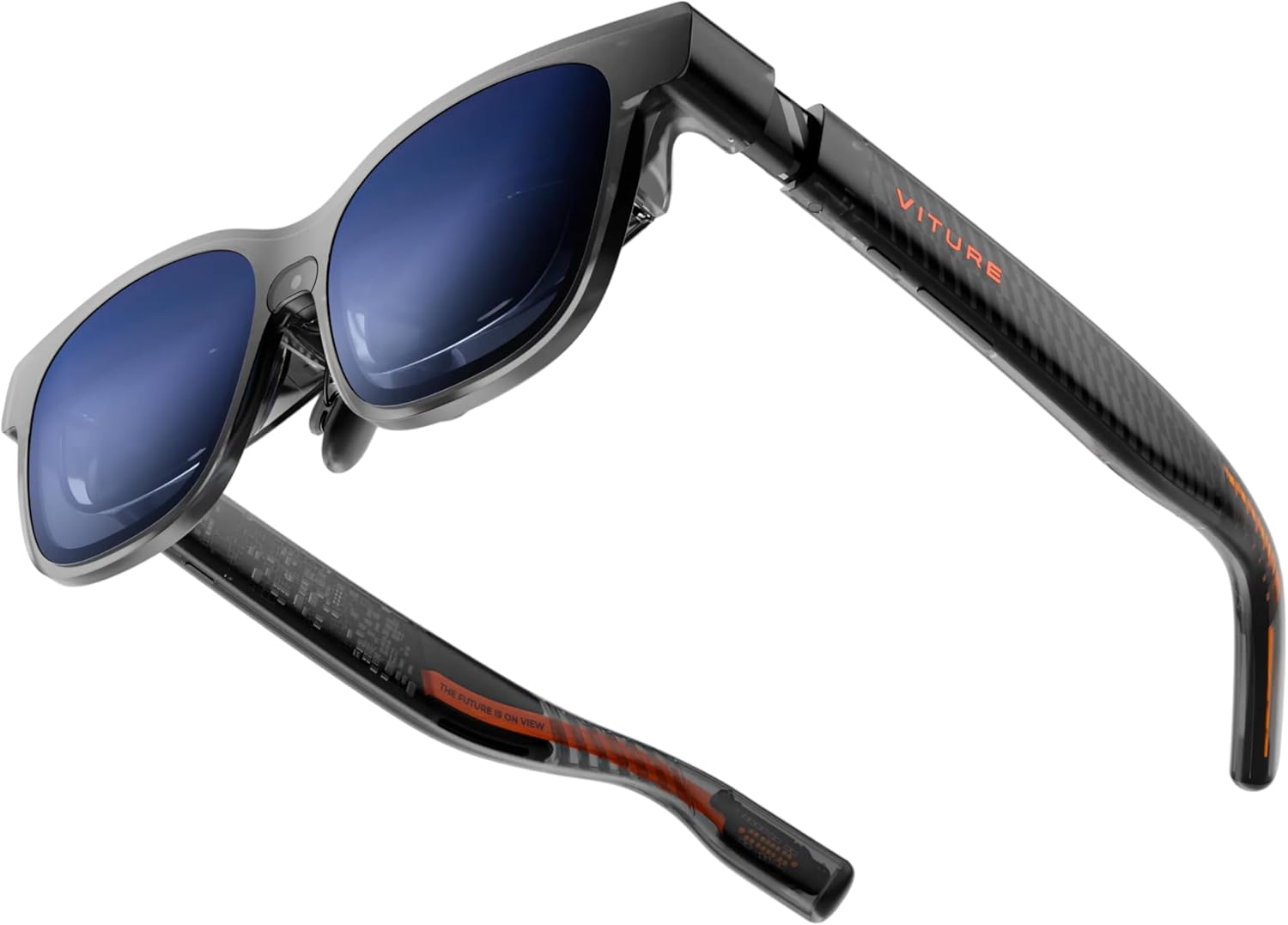
VITURE Luma Pro XR Glasses
$499.00152" display at 1200p offers the crispest text and UI rendering of the two. Electrochromic film handles dynamic brightness without a physical shade. Superior value at $100 less.
What YouTube Reviewers Found

CNET — 359,591+ views · posted 2 years ago. In-depth review covering setup, real-world use, and build quality.
What YouTube Reviewers Found

GizmoSlipTech — 61,288+ views · posted 7 months ago. In-depth review covering setup, real-world use, and build quality.
What you get
- 1200p resolution per eye (sharper than 1080p)
- Built-in electrochromic dimming—no external shade needed
- $100 price advantage
- Harman-tuned audio for rich sound
The tradeoff
- Narrower 52° FOV (vs 57° on XREAL)
- Smaller 152" virtual screen
- No dedicated motion-to-photon latency spec
- Fewer review samples (520 vs 264)
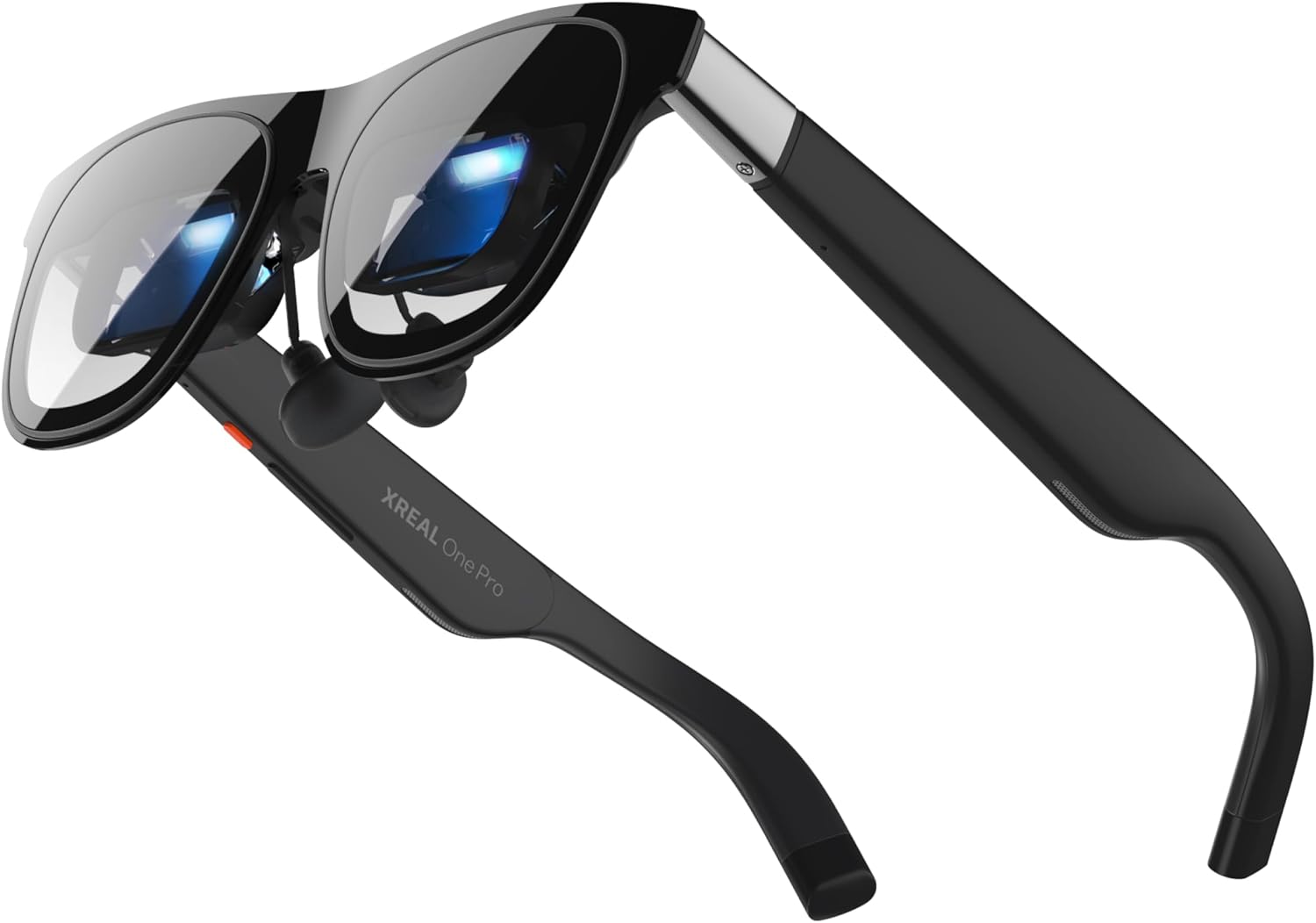
XREAL One Pro AR Glasses with X1 Chip
$599.0057° FOV and 171" virtual screen deliver the most immersive AR experience. X1 chip enables real 3D depth and guarantees 3ms motion-to-photon latency—critical for gaming and fast-moving content.
What YouTube Reviewers Found

Austin Evans — 392,157+ views · posted 4 months ago. In-depth review covering setup, real-world use, and build quality.
What YouTube Reviewers Found

The Tech Chap — 346,827+ views · posted 10 months ago. In-depth review covering setup, real-world use, and build quality.
What you get
- Widest FOV: 57° (5° wider than VITURE)
- Largest screen: 171" (19" larger virtual diagonal)
- X1 chip with real 3D and 3ms M2P latency
- Genuine 3D depth perception capability
The tradeoff
- Lower 1080p resolution (vs 1200p)
- $100 higher price
- No electrochromic dimming—requires external shade
- Slightly less review volume
Full Spec Comparison
| Spec | VITURE Luma Pro | XREAL One Pro | Winner |
|---|---|---|---|
| Price | $499 | $599 | A |
| Virtual Screen Size | 152 inches | 171 inches | B |
| Field of View (FOV) | 52° | 57° | B |
| Refresh Rate | 120 Hz | 120 Hz | Tie |
| Resolution per Eye | 1200p | 1080p | A |
| Est. Pixels Per Degree (PPD) | ~28 PPD (1200p ÷ 52° FOV) | ~23 PPD (1080p ÷ 57° FOV) | A |
| Electrochromic Dimming | Yes (built-in) | No (external shade required) | A |
| Dedicated Chipset for 3D/M2P | No (software-based) | Yes (X1 chip) | B |
| Motion-to-Photon Latency | Not disclosed by manufacturer | 3 ms (via X1 chip) | B |
| Real 3D Capability | Not disclosed | Yes (X1 chip–enabled) | B |
| Audio Tuning | Harman | Not specified in product data | A |
| USB-C DisplayPort Alt Mode | Yes (implied—1200p tethered) | Yes (confirmed—1080p tethered) | Tie |
| iPhone 15/16/17 Support | Yes (USB-C capable) | Yes (USB-C capable) | Tie |
| Steam Deck / ROG Ally Compat. | Yes (USB-C DP) | Yes (USB-C DP) | Tie |
| Myopia Diopter Adjustment | Not disclosed | Not disclosed | Tie |
| Amazon Rating | 4.0 stars | 4.0 stars | Tie |
| Review Count | 520+ | 264+ | A |
Display & Field of View
The display comparison is where these two flagship glasses diverge most sharply. The VITURE Luma Pro delivers 1200p resolution per eye across a 52° field of view, translating to an estimated 28 pixels-per-degree—roughly equivalent to desktop-class sharpness. Text rendering and UI elements will appear crisp, with minimal pixelation at typical viewing distances. The 152" virtual screen size is comfortable for desk work and content consumption without overwhelming the visual field.
The XREAL One Pro trades resolution density for immersion: 1080p per eye across a wider 57° FOV yields approximately 23 PPD. That 5° FOV advantage is meaningful—it's roughly 10% more horizontal and vertical coverage, and the 171" virtual screen feels noticeably larger and more presence-filling. For gaming, video consumption, or AR applications where peripheral awareness matters, the XREAL's wider view wins. For reading text, code, or detailed graphics, the VITURE's pixel density advantage is tangible.
Brightness and color accuracy are not disclosed for either model in the available specs. Both are marketed as sunlight-visible displays, but without nit measurements or gamma curves, brightness comparison is speculative. The VITURE's electrochromic film lets you dynamically reduce glare without a separate shade—a practical advantage for mobile use. The XREAL requires an external sunshade accessory to manage reflections, adding cost and bulk.
Movement & Stabilization
Here's where the XREAL One Pro asserts technical superiority. The dedicated X1 chip handles motion-to-photon latency with a published 3 milliseconds—a guarantee that head tracking and content movement will feel responsive without lag. This is critical for active use cases: gaming, video calls with head-tracked cursors, or any scenario where your head movement should instantly translate to on-screen updates.
The VITURE Luma Pro does not publish a motion-to-photon figure. Reviewers give a solid 4.0-star rating, suggesting acceptable performance in most scenarios, but without a latency spec, technical users cannot guarantee responsiveness for demanding applications. VITURE likely uses software-based head tracking (9-axis IMU) without a dedicated coprocessor, which may introduce variable latency depending on the host device's processing power.
The X1 chip also enables XREAL's "real 3D" capability—stereoscopic depth rendering using dual-lens optics. This is not a gimmick; 3D content on the XREAL will have genuine depth separation, making it superior for 3D games, medical imaging, CAD visualization, and spatial design work. The VITURE does not advertise 3D depth perception, limiting its appeal for volumetric or stereoscopic workflows.
Both glasses are tethered—they require a host device (phone, PC, tablet, handheld console) and lack internal processing or battery. This keeps weight down and cost manageable, but neither offers standalone operation.
Audio & Comfort
Audio tuning is a practical differentiator often overlooked. The VITURE Luma Pro features Harman-tuned audio drivers—Harman is a premium audio standards organization (owned by Samsung) known for neutral, balanced tuning with good midrange clarity. This is ideal for video calls, podcasts, and professional content. The XREAL One Pro's audio brand is not disclosed in the product spec, making it impossible to assess tuning philosophy without direct product evaluation.
Weight, nose pad comfort, and myopia adjustment (diopter range) are not disclosed for either model. This is a significant gap for technical comparison. Typical flagship AR glasses weigh 90–150 grams; without published specs, you cannot directly compare comfort during extended wear. Both models likely include adjustable nose pads and IPD adjustment, but VITURE's slightly narrower 52° FOV may distribute weight more centrally, while XREAL's 57° FOV spreads optical elements wider, potentially affecting balance. This is worth checking against detailed reviews before purchasing.
The VITURE's electrochromic film is a comfort feature: instead of swapping physical shades or relying on external clips, you can electronically dim the lenses in bright environments. The XREAL One Pro does not have this built-in, requiring an accessory shade—more hassle, additional expense, and more parts to lose.
Device Compatibility
Both glasses leverage USB-C DisplayPort Alt Mode, making them compatible with:
- iPhones (15, 16, 17+): Both support native USB-C video output. The VITURE's 1200p payload is more demanding than XREAL's 1080p, potentially requiring a more robust host USB-C implementation, but iPhone 15 Pro and later handle this without issue.
- iPads (Pro M2/M4): Full compatibility with both glasses.
- Steam Deck: Both work flawlessly via USB-C. The VITURE's higher resolution is more taxing on Deck's limited GPU in certain games, but 1200p is achievable at 120 Hz for most compatible titles.
- ROG Ally and other Windows handhelds: Compatible with both, assuming USB-C DP and sufficient graphics power.
- Mac (M-series): Yes, both work with MacBook Pro/Air via USB-C.
- Gaming PCs: Full support via DisplayPort or USB-C hub.
- Android phones (USB-C): Yes, though app optimization varies by device.
No edge cases or compatibility restrictions are disclosed for either model. Both are universal tethered displays, with no software lock-in beyond typical driver support.
Value for Money
The $100 price delta breaks down as follows:
VITURE Luma Pro at $499: You're paying for resolution clarity (1200p), electrochromic convenience, Harman audio tuning, and a more complete package out-of-the-box. There are no hidden accessory costs—no external shade needed. For desk-based work, content consumption, and users who value pixel density, this is the better value.
XREAL One Pro at $599: The premium buys you immersion (57° FOV, 171" screen), dedicated 3D capability via the X1 chip, published motion-to-photon latency (3ms), and a larger presence for gaming and media. The tradeoff: lower resolution, and you'll want an accessory sunshade ($30–50) for outdoor use. The cost of ownership is $599–650 after accounting for shading accessories.
For resale value, both are current-generation (2026) flagships with 4.0-star ratings. The VITURE has more review volume (520+ vs 264+), which may give it stronger secondary market demand, but this is speculative. XREAL has stronger brand recognition in the enthusiast AR community, which could offset smaller review counts.
Warranty and support are not disclosed in the product specs. Check manufacturer websites (VITURE and XREAL) for details on coverage, RMA processes, and repair costs.
Which Should You Buy?
For Business Travel
VITURE Luma Pro wins. Lighter, sharper display for reading documents and spreadsheets, electrochromic dimming for use in variable lighting (flights, hotels), and Harman audio for professional calls. No external shade accessory to pack. The 152" screen is large enough for productive work without the bulk of XREAL's 171" immersion.
For Steam Deck / ROG Ally Gaming
XREAL One Pro is the choice. The 57° FOV and 3ms motion-to-photon latency are measurable advantages for fast-paced games. Real 3D depth (via X1 chip) transforms supported games into fully stereoscopic experiences. VITURE's narrower FOV and undisclosed latency may feel limiting in action games, though 1200p resolution is sharper for turn-based or puzzle games.
For Second Monitor Replacement at a Desk
VITURE Luma Pro is better. 1200p at 152" inches delivers the sharpest text and UI. Electrochromic dimming reduces eye strain in bright offices. Harman audio is superior for video calls and audio-critical work. The XREAL's larger screen sounds appealing in theory, but 1080p resolution at 57° FOV introduces noticeable pixelation in code and text—a dealbreaker for desk use.
For iPhone + iPad Users
Either one works equally well. Both support USB-C DisplayPort on iPhone 15+ and all iPad Pro models. Resolution and FOV preference should guide your choice: prefer crispness and built-in dimming (VITURE) or immersive screen size and 3D (XREAL). No compatibility gaps favor either product for Apple ecosystem users.
For Budget-Constrained Buyers
VITURE Luma Pro at $499 is the clear winner if your budget is tight. You're saving $100, getting superior resolution, and avoiding accessory costs (no shade needed). The 4.0-star rating and 520+ reviews signal reliability and satisfied users. XREAL's $599 entry point is not unreasonable for what it offers, but VITURE delivers more upfront value.
Both the VITURE Luma Pro and XREAL One Pro are capable flagship AR glasses with identical 4.0-star ratings. The VITURE excels in clarity, cost, and convenience; the XREAL pushes immersion, latency guarantees, and 3D capability. Your choice depends on whether you prioritize sharpness and practicality (VITURE) or presence and responsiveness (XREAL). Neither is a wrong choice—both represent genuine engineering at the premium AR tier.
How These Were Selected
AR glasses for head-to-head comparison were evaluated on seven criteria: field of view (FOV — wider is more immersive; 50–57° is the current range), refresh rate (60/90/120Hz — higher reduces motion-to-photon latency), native 3DoF support (whether head-locking a virtual screen works without a separate Beam/adapter), USB-C DP plug-and-play compatibility (iPhone 15/16/17, Steam Deck, ROG Ally, Mac, PC), weight and fit (70–85g is typical; heavier models cause fatigue on long sessions), myopia adjustment range (built-in diopter dial vs prescription inserts), and review volume (minimum 85+ verified Amazon reviews, 4.0+ stars). Pricing tiers span entry-level ($350–$410), mid-range ($410–$500), and flagship ($500–$600) so buyers at any budget have a solid pick. All six products were confirmed in-stock on US Amazon as of 2026-04-19.
Common Questions
Do AR glasses work with iPhone 15 / 16 / 17?
Yes — all major 2025-2026 models (VITURE Pro XR, VITURE Luma Pro, XREAL One, XREAL One Pro, XREAL 1S, Rokid Max 2) connect via USB-C DisplayPort Alt Mode on iPhone 15 and later. Older iPhones with Lightning require a separate adapter or are not supported. Android phones need USB-C with DP Alt Mode — check your phone's spec sheet before buying.
What's the difference between 50°, 52°, and 57° FOV?
Field of view determines how much of your vision the virtual screen fills. 50° (XREAL One, Rokid Max 2) feels like a large monitor at arm's length; 52° (VITURE Luma Pro, XREAL 1S) is slightly more immersive; 57° (XREAL One Pro — the widest on Amazon right now) feels like sitting mid-theater. For productivity and second-screen use, 50° is plenty. For movies and gaming immersion, wider matters.
Do I need a separate Beam / adapter for a stationary virtual screen?
Not on current XREAL models. XREAL One, One Pro, and 1S all have the X1 spatial chip built in — they support native 3DoF (the screen locks in place while you turn your head) without a Beam. VITURE Pro XR, Luma Pro, and Rokid Max 2 work fine for pinned displays but use software-based stabilization on paired phones/laptops instead of on-glasses chips.
How do they compare to a real portable monitor?
For head-to-head comparison, AR glasses trade pixel sharpness and brightness for portability and privacy. A 15.6" 1080p portable monitor is sharper per square inch and viewable by anyone nearby; AR glasses give you a 135–215" virtual screen only you can see, weigh about 80g vs 700g+, and fit in a glasses case. They're not a full replacement — they complement a monitor for travel, flights, and confined spaces.
Will they work with prescription glasses?
Most models include built-in myopia (nearsightedness) adjustment dials — VITURE Pro XR and Luma Pro cover 0 to -5.00 diopters. For farsightedness, astigmatism, or stronger prescriptions, all six models support third-party prescription inserts (typically $40–$80 from the brand). If you have complex vision needs, confirm the insert option before buying.
Can I use them with Steam Deck and ROG Ally?
Yes — all six models support USB-C DP plug-and-play with Steam Deck (original LCD and OLED) and ROG Ally X. XREAL 1S and XREAL One Pro get the most out of handhelds because the on-glasses X1 chip adds head-locked display without Steam Deck CPU overhead. VITURE and Rokid work but rely on the handheld for stabilization.
Who This Is For
- Our pick (VITURE Luma Pro) — the right choice for most people using AR glasses for head-to-head comparison. Best combination of image quality, comfort, and compatibility. If you're not sure which to get, start here.
- Entry-level pick (VITURE Luma Pro) — if you want to try AR glasses without spending $500+. Expect a narrower FOV or fewer dimming/audio features, but the core virtual-screen experience is still solid on any USB-C phone or handheld.
- Premium pick (XREAL One Pro) — if you have a specific need the top pick doesn't fully meet: wider FOV, native 3DoF without a Beam, higher per-eye resolution, or 57° cinema-style immersion. Read "Is the upgrade worth it?" below before spending the extra.
- Skip AR glasses entirely if: you primarily need a sharp, bright outdoor display, or your source device (older iPhone, non-DP Android) lacks USB-C DisplayPort support. A portable monitor is a better fit.
Expert Video Reviews
What YouTube Reviewers Found

Mark Spurrell — 110,435+ views · posted 3 years ago. In-depth review covering setup, real-world use, and build quality.
Is the Premium Pick Worth It?
XREAL One Pro costs about $100 more than VITURE Luma Pro. Here's what you get for the premium, and whether it's worth it:
- Alternate choice in this comparison — see the spec matrix above for where each wins
Bottom line: Upgrade if you need the specific feature delta highlighted in the spec matrix above. Stick with VITURE Luma Pro if the cheaper option already covers your use case.