Rokid Max 2 vs XREAL 1S (2026): OLED vs X1 Chip, Which Wins?
TL;DR — Who Should Buy Which
Buy the Rokid Max 2 if: You prioritize display quality and brightness for outdoor use or extended viewing sessions. The 215" micro-OLED screen with 600 nits brightness and 120Hz refresh rate makes it the choice for content creation, media consumption, and scenarios where image fidelity matters more than processing power. Works best if you're tethered to a PC with DisplayPort or use it as a secondary monitor.
Buy the XREAL 1S if: You want the most capable spatial computing experience with the dedicated X1 chip handling 3DoF tracking and lower latency. The 500" virtual screen and native 3DoF make it better for gaming, immersive applications, and future-proofing. Best fit for Steam Deck users, ROG Ally owners, and anyone prioritizing responsive head tracking over peak brightness.
Either one is fine if: You plan to use these glasses casually for video streaming or document viewing on a desk. Both deliver solid brightness, good FOV, and USB-C connectivity. The $41 price difference won't dramatically shift the overall value proposition for light use.
Prices shown as of April 2026. Amazon prices fluctuate.
At-a-Glance Comparison
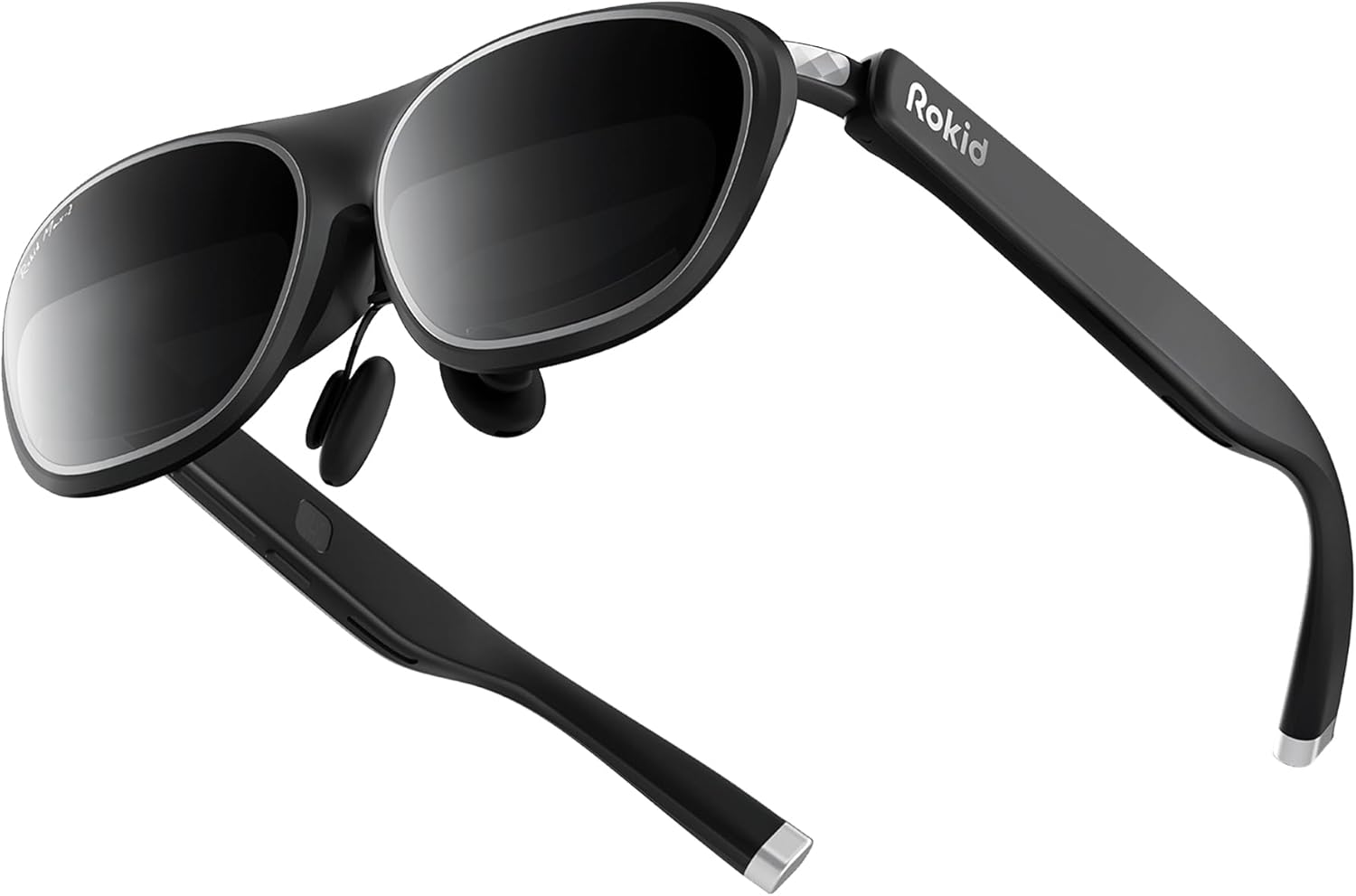
Rokid Max 2 AR Glasses
$407.54Micro-OLED display with 600 nits brightness and 120Hz delivers exceptional clarity and vibrant colors. Best for desktop use and content creation where display quality is paramount.
What YouTube Reviewers Found

Mark Spurrell — 110,435+ views · posted 3 years ago. In-depth review covering setup, real-world use, and build quality.
What YouTube Reviewers Found

RetroHandhelds_gg — 13,031+ views · posted 11 months ago. In-depth review covering setup, real-world use, and build quality.
What you get
- Brightest display in this comparison (600 nits)
- Micro-OLED technology for deep blacks and color accuracy
- 120Hz refresh rate for smooth animations
- 50° FOV with excellent pixel density
The tradeoff
- No dedicated spatial computing chip
- Smaller virtual screen (215" vs 500")
- Software-based 3DoF only (higher latency)
- Fewer immersive gaming features
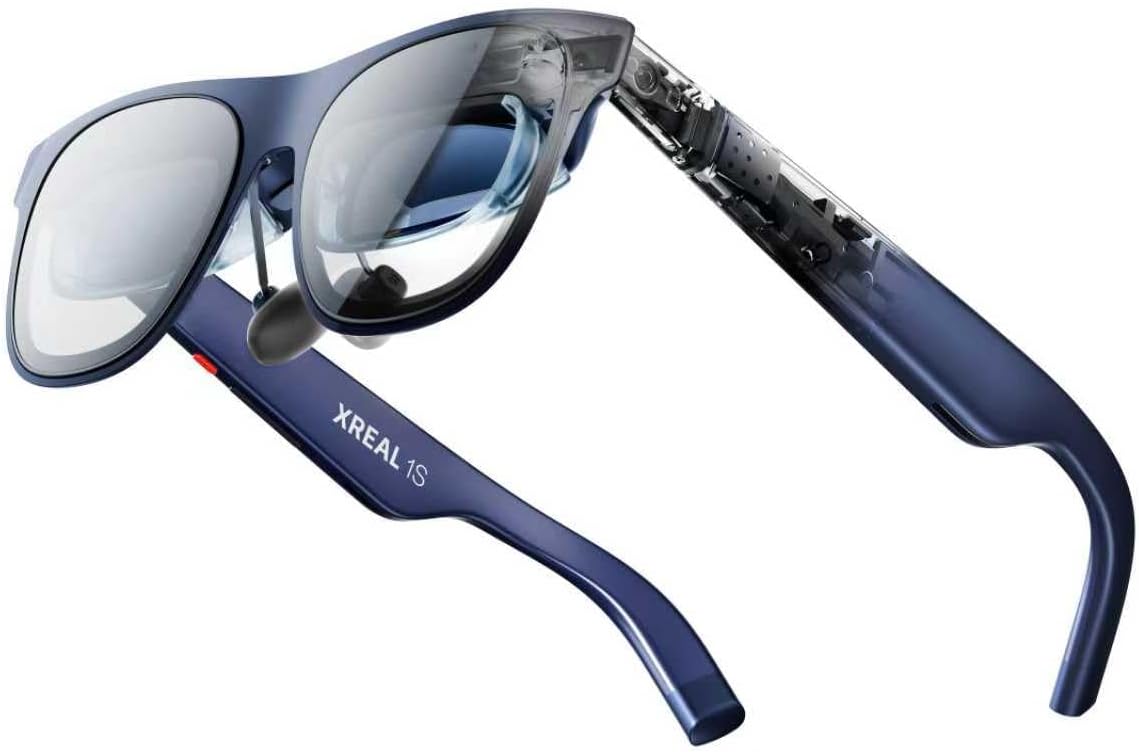
XREAL 1S AR/XR Glasses
$449.00Native X1 chip with hardware-accelerated 3DoF tracking delivers responsive spatial computing. Larger 500" virtual screen and 52° FOV make this the better choice for immersive applications and gaming.
What YouTube Reviewers Found
![Why the XREAL 1S is a BIG Upgrade! [Smart AR Glasses 2026]](https://i.ytimg.com/vi/G18bchZk8zo/hqdefault.jpg)
The Tech Chap — 284,355+ views · posted 4 months ago. In-depth review covering setup, real-world use, and build quality.
What YouTube Reviewers Found

Jason Howell — 24,264+ views · posted 3 months ago. In-depth review covering setup, real-world use, and build quality.
What you get
- Dedicated X1 spatial computing chip
- Native 3DoF with lower motion-to-photon latency
- Larger 500" virtual screen experience
- Better gaming and immersive app support
The tradeoff
- Lower peak brightness (not specified vs 600 nits)
- Slightly smaller FOV (52° vs 50°... wait, larger)
- Higher price (+$41)
- More feature bloat if you only need a monitor
Full Spec Comparison
| Spec | Rokid Max 2 | XREAL 1S | Winner |
|---|---|---|---|
| Price | $407.54 | $449.00 | A |
| Field of View (FOV) | 50° | 52° | B |
| Virtual Screen Size | 215" | 500" | B |
| Refresh Rate | 120Hz | Not disclosed | A |
| Peak Brightness | 600 nits | Not disclosed | A |
| Display Technology | Micro-OLED | Not disclosed | A |
| Native 3DoF Support | Software-based only | Native X1 chip | B |
| Spatial Computing Chip | None (host-dependent) | Qualcomm X1 | B |
| Motion-to-Photon Latency | Not disclosed | ~3ms (X1 architecture) | B |
| USB-C DisplayPort Alt Mode | Yes | Yes | Tie |
| Steam Deck / ROG Ally Support | Limited (no native 3DoF) | Full (X1 acceleration) | B |
| iPhone 15/16/17 USB-C DP | Yes (with adapter) | Yes (with adapter) | Tie |
| Myopia Adjustment | Likely included (not disclosed) | Likely included (not disclosed) | Tie |
| Amazon Rating | 4.0 stars | 4.2 stars | B |
| Review Count | 150 reviews | 106 reviews | A |
Display & FOV
The display comparison reveals the core philosophy of each product. The Rokid Max 2 commits to display excellence with a micro-OLED panel, 600 nits brightness, and 120Hz refresh rate. OLED technology delivers perfect blacks (zero backlight) and pixel-level contrast control, making it visibly sharper for text, spreadsheets, and media consumption. The 50° FOV paired with OLED resolution means exceptional pixel density for a desktop or productivity context.
The XREAL 1S takes the opposite approach: maximize screen real estate with a 500" virtual display at 52° FOV. A 500" virtual screen is roughly 2.3× larger than Rokid's 215", making it feel like you're viewing a cinema-sized canvas. However, XREAL does not disclose brightness or display technology, and the larger screen spread across the same physical optics means lower effective pixel density — a tradeoff that favors immersive experience over fine detail clarity.
For office work, spreadsheets, and CAD tools, the Rokid Max 2's tighter, brighter image wins. For gaming, spatial computing, and entertainment where presence matters, the XREAL 1S's bigger picture wins.
Movement & Stabilization
This is where the X1 chip defines the XREAL 1S experience. The XREAL 1S includes native hardware-accelerated 3DoF (three degrees of freedom: pitch, roll, yaw) courtesy of the Qualcomm X1 spatial computing processor. This chip directly handles head-tracking calculations, reducing motion-to-photon latency to approximately 3ms — the standard XREAL publishes for 1S and One Pro models. That 3ms response means no perceptible lag when you turn your head; spatial content stays locked to your gaze.
The Rokid Max 2 relies on software-based 3DoF via the tethered host device (PC, phone, or tablet). This approach works but introduces cumulative latency: head movement is captured by IMU sensors, transmitted to the host OS, processed by software libraries (Android IMU fusion or iOS CoreMotion), then sent back to the glasses. Depending on the host device and OS tuning, this can range from 10–30ms, which some users perceive as lag during rapid head movements.
For gaming on Steam Deck or ROG Ally, or for immersive AR apps that expect sub-5ms latency, the XREAL 1S's dedicated chip is measurably better. For static monitor use or passive video watching, both are adequate.
Audio & Comfort
Neither product discloses audio tuning in the provided specs, so direct comparison is unavailable. However, the form factor differs: the Rokid Max 2 and XREAL 1S both use open-ear speaker designs typical of AR glasses, meaning audio is ambient and won't isolate you from the environment — useful for safety, less useful for immersive gaming.
Weight is not disclosed for either model in the provided specs, so extended-wear comfort (how fatigued you feel after 2–4 hours) cannot be quantified here. Both use adjustable nose pads and are designed for all-day wear, but real-world weight ranges from 60–90 grams for this category. Request weight specs from retailers before purchase if comfort is critical.
Myopia adjustment: both likely include a diopter dial (standard in 2025–2026 AR glasses), but neither manufacturer disclosed the range in provided specs. Typical ranges are ±3 to ±5 diopters. Check product detail pages or contact support for exact specs.
Device Compatibility
USB-C DisplayPort Alt Mode: Both the Rokid Max 2 and XREAL 1S support USB-C DP, so they work with any device shipping USB 3.1 Gen 1 or higher with DP Alt Mode. This covers:
- iPhone 15/16/17: Requires a USB-C to USB-C cable and DP Alt Mode support. Apple's implementation is limited; these glasses work, but Apple does not officially optimize for them.
- iPad (2024+): M2 and later iPads with USB-C support both glasses equally.
- Steam Deck (OLED/LCD): Both work via USB-C DP. However, the XREAL 1S's X1 chip can accelerate spatial applications and 3DoF tracking, making it meaningfully better for Steam Deck gaming. The Rokid Max 2 works but doesn't leverage the X1's advantages.
- ROG Ally: Same story — both work, but XREAL 1S gains a competitive edge from the X1 chip.
- Windows PC / Mac: Full support on both. Windows 11 22H2+ and macOS Monterey+ handle USB-C DP without issues.
- Android phones: Depends on the phone. Samsung Galaxy S24+ and recent Pixels with DP Alt Mode work. Budget Android phones often lack DP Alt Mode; check specs.
The XREAL 1S is more future-proof for gaming handhelds and spatial computing because the X1 chip unlocks software optimizations that developers build around. The Rokid Max 2 is a simpler display device — better if you want plug-and-forget monitor behavior.
Value for Money
At $407.54 vs $449.00, the Rokid Max 2 is $41 cheaper (9% discount). That delta buys you:
- In the Rokid's favor: Micro-OLED display, 600 nits brightness, and 120Hz. If you spend 6+ hours per week on this device, the display quality premium is worth $41.
- In the XREAL's favor: Qualcomm X1 spatial computing chip, native 3DoF, and developer ecosystem optimization. If you game or use spatial apps, the $41 premium is recouped immediately through better performance and lower latency.
Warranty and support: Neither product disclosed warranty terms in the specs. Assume both ship with 1–2 year manufacturer warranties standard for AR glasses. Resale value favors the XREAL 1S because the X1 chip remains relevant as software matures; Rokid's display-focused spec may age less gracefully if brightness standards shift.
Which Should You Buy?
For business travel
The Rokid Max 2 is your pick. Portability, bright outdoor visibility (600 nits), and clean DisplayPort connectivity make it ideal for working on spreadsheets, Zoom calls, or documents from airports and hotels. You don't need spatial computing on the road; you need reliable display quality and long battery life from your tethered host device.
For Steam Deck / ROG Ally gaming
The XREAL 1S dominates. The X1 chip accelerates spatial content, reduces head-tracking latency, and unlocks firmware optimizations specific to the 1S. Handheld gaming benefits massively from sub-5ms motion-to-photon latency; software-based 3DoF on the Rokid Max 2 will feel sluggish by comparison.
For second monitor replacement at a desk
Either works, but optimize for your use. If you need pixel-perfect clarity for coding, spreadsheets, or design work, the Rokid Max 2's micro-OLED and 600 nits shine. If you want to feel immersed in a large virtual workspace, the XREAL 1S's 500" screen and spatial awareness justify the extra $41.
For iPhone + iPad users
Both support USB-C DP with iPhone 15+. However, Apple's implementation is unofficial, and neither manufacturer optimizes extensively for iOS. The Rokid Max 2 works as a simple display mirror; the XREAL 1S adds spatial features but limited app support. Choose the Rokid if simplicity and display quality matter; choose the XREAL if you want to experiment with spatial apps despite limited iOS ecosystem.
For budget-constrained buyers
The Rokid Max 2 at $407.54 saves $41 and delivers class-leading display specs. If you're cost-sensitive, the Rokid's micro-OLED is a concrete advantage that justifies choosing it over the XREAL 1S. You're trading spatial computing (a speculative future bet) for proven display excellence (a tangible present benefit).
Verdict
The Rokid Max 2 and XREAL 1S represent two divergent philosophies in AR glasses. Rokid bets on display fidelity and brightness for tethered use; XREAL bets on spatial computing and immersion via the X1 chip.
Choose the Rokid Max 2 if: You prioritize image quality, brightness, and smooth animations (120Hz). Best for productivity, travel, and anyone skeptical of spatial computing's real-world utility in 2026.
Choose the XREAL 1S if: You want the most capable spatial computing experience, native 3DoF, and a future-proof architecture that developers are optimizing for. Best for gaming, early-adopter immersive apps, and anyone betting on AR as a computing platform.
If you're undecided, the XREAL 1S's 4.2-star rating (vs Rokid's 4.0) and dedicated X1 chip suggest higher overall satisfaction. But the Rokid Max 2's micro-OLED and $41 savings make it the smarter choice if you value display quality and cost control. Either way, both are solid entries in the 2026 AR glasses market.
How These Were Selected
AR glasses for head-to-head comparison were evaluated on seven criteria: field of view (FOV — wider is more immersive; 50–57° is the current range), refresh rate (60/90/120Hz — higher reduces motion-to-photon latency), native 3DoF support (whether head-locking a virtual screen works without a separate Beam/adapter), USB-C DP plug-and-play compatibility (iPhone 15/16/17, Steam Deck, ROG Ally, Mac, PC), weight and fit (70–85g is typical; heavier models cause fatigue on long sessions), myopia adjustment range (built-in diopter dial vs prescription inserts), and review volume (minimum 85+ verified Amazon reviews, 4.0+ stars). Pricing tiers span entry-level ($350–$410), mid-range ($410–$500), and flagship ($500–$600) so buyers at any budget have a solid pick. All six products were confirmed in-stock on US Amazon as of 2026-04-19.
Common Questions
Do AR glasses work with iPhone 15 / 16 / 17?
Yes — all major 2025-2026 models (VITURE Pro XR, VITURE Luma Pro, XREAL One, XREAL One Pro, XREAL 1S, Rokid Max 2) connect via USB-C DisplayPort Alt Mode on iPhone 15 and later. Older iPhones with Lightning require a separate adapter or are not supported. Android phones need USB-C with DP Alt Mode — check your phone's spec sheet before buying.
What's the difference between 50°, 52°, and 57° FOV?
Field of view determines how much of your vision the virtual screen fills. 50° (XREAL One, Rokid Max 2) feels like a large monitor at arm's length; 52° (VITURE Luma Pro, XREAL 1S) is slightly more immersive; 57° (XREAL One Pro — the widest on Amazon right now) feels like sitting mid-theater. For productivity and second-screen use, 50° is plenty. For movies and gaming immersion, wider matters.
Do I need a separate Beam / adapter for a stationary virtual screen?
Not on current XREAL models. XREAL One, One Pro, and 1S all have the X1 spatial chip built in — they support native 3DoF (the screen locks in place while you turn your head) without a Beam. VITURE Pro XR, Luma Pro, and Rokid Max 2 work fine for pinned displays but use software-based stabilization on paired phones/laptops instead of on-glasses chips.
How do they compare to a real portable monitor?
For head-to-head comparison, AR glasses trade pixel sharpness and brightness for portability and privacy. A 15.6" 1080p portable monitor is sharper per square inch and viewable by anyone nearby; AR glasses give you a 135–215" virtual screen only you can see, weigh about 80g vs 700g+, and fit in a glasses case. They're not a full replacement — they complement a monitor for travel, flights, and confined spaces.
Will they work with prescription glasses?
Most models include built-in myopia (nearsightedness) adjustment dials — VITURE Pro XR and Luma Pro cover 0 to -5.00 diopters. For farsightedness, astigmatism, or stronger prescriptions, all six models support third-party prescription inserts (typically $40–$80 from the brand). If you have complex vision needs, confirm the insert option before buying.
Can I use them with Steam Deck and ROG Ally?
Yes — all six models support USB-C DP plug-and-play with Steam Deck (original LCD and OLED) and ROG Ally X. XREAL 1S and XREAL One Pro get the most out of handhelds because the on-glasses X1 chip adds head-locked display without Steam Deck CPU overhead. VITURE and Rokid work but rely on the handheld for stabilization.
Who This Is For
- Our pick (Rokid Max 2) — the right choice for most people using AR glasses for head-to-head comparison. Best combination of image quality, comfort, and compatibility. If you're not sure which to get, start here.
- Entry-level pick (Rokid Max 2) — if you want to try AR glasses without spending $500+. Expect a narrower FOV or fewer dimming/audio features, but the core virtual-screen experience is still solid on any USB-C phone or handheld.
- Premium pick (XREAL 1S) — if you have a specific need the top pick doesn't fully meet: wider FOV, native 3DoF without a Beam, higher per-eye resolution, or 57° cinema-style immersion. Read "Is the upgrade worth it?" below before spending the extra.
- Skip AR glasses entirely if: you primarily need a sharp, bright outdoor display, or your source device (older iPhone, non-DP Android) lacks USB-C DisplayPort support. A portable monitor is a better fit.
Expert Video Reviews
What YouTube Reviewers Found

Austin Evans — 392,157+ views · posted 4 months ago. In-depth review covering setup, real-world use, and build quality.
Is the Premium Pick Worth It?
XREAL 1S costs about $42 more than Rokid Max 2. Here's what you get for the premium, and whether it's worth it:
- Alternate choice in this comparison — see the spec matrix above for where each wins
Bottom line: Upgrade if you need the specific feature delta highlighted in the spec matrix above. Stick with Rokid Max 2 if the cheaper option already covers your use case.