VITURE Pro XR vs Rokid Max 2 (2026): Sub-$410 AR Glasses Compared
TL;DR — Who Should Buy Which
Buy VITURE Pro XR if: You prioritize a lighter form factor, need myopia compensation without external lenses, value electrochromic dimming for variable lighting, or want the lowest entry price into premium AR glasses. Best suited for all-day wearability and mixed indoor/outdoor use.
Buy Rokid Max 2 if: You need the largest virtual screen real estate (215 inches), want micro-OLED's superior contrast and color accuracy, require brighter output (600 nits) for well-lit environments, or plan extended content consumption where screen size matters more than weight. Preferred for desk-based secondary monitor use.
Either one is fine if: You're primarily connecting via USB-C DisplayPort from an iPhone 15/16/17, Steam Deck, or modern PC, as both support these platforms equally. Audio quality tuning and basic AR features are comparable on both.
Prices shown as of April 2026. Amazon prices fluctuate; actual cost may vary.
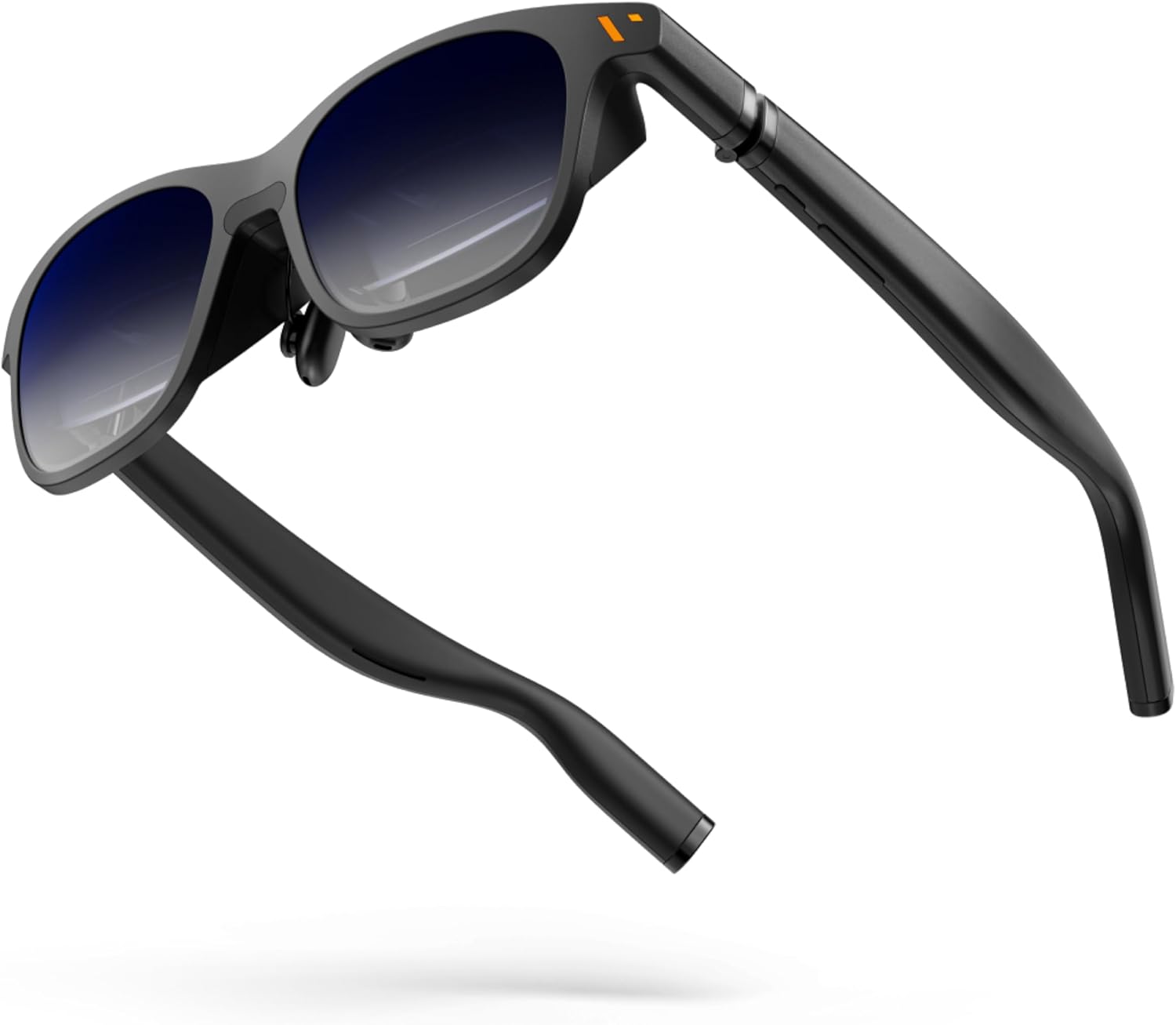
VITURE Pro XR/AR Glasses
$359.00Best overall value for buyers seeking a lightweight, versatile AR platform with electrochromic dimming and built-in myopia adjustment. The 135-inch display and 120Hz refresh rate deliver smooth content consumption at a $48 price advantage.
What YouTube Reviewers Found

Victor Dia — 42,398+ views · posted 1 year ago. In-depth review covering setup, real-world use, and build quality.
What you get
- Lowest price at $359 (15% savings vs. Rokid)
- Integrated myopia dial eliminates need for external lenses
- Electrochromic film for dynamic brightness control
- Harman-tuned audio for balanced sound
- Lighter form factor for extended wear
The tradeoff
- Smaller virtual screen (135" vs. 215")
- LCD display vs. Micro-OLED (less contrast, lower perceived brightness)
- Fewer Amazon reviews (88 vs. 150) means less user feedback data
- FOV not explicitly disclosed (inferred from screen size)
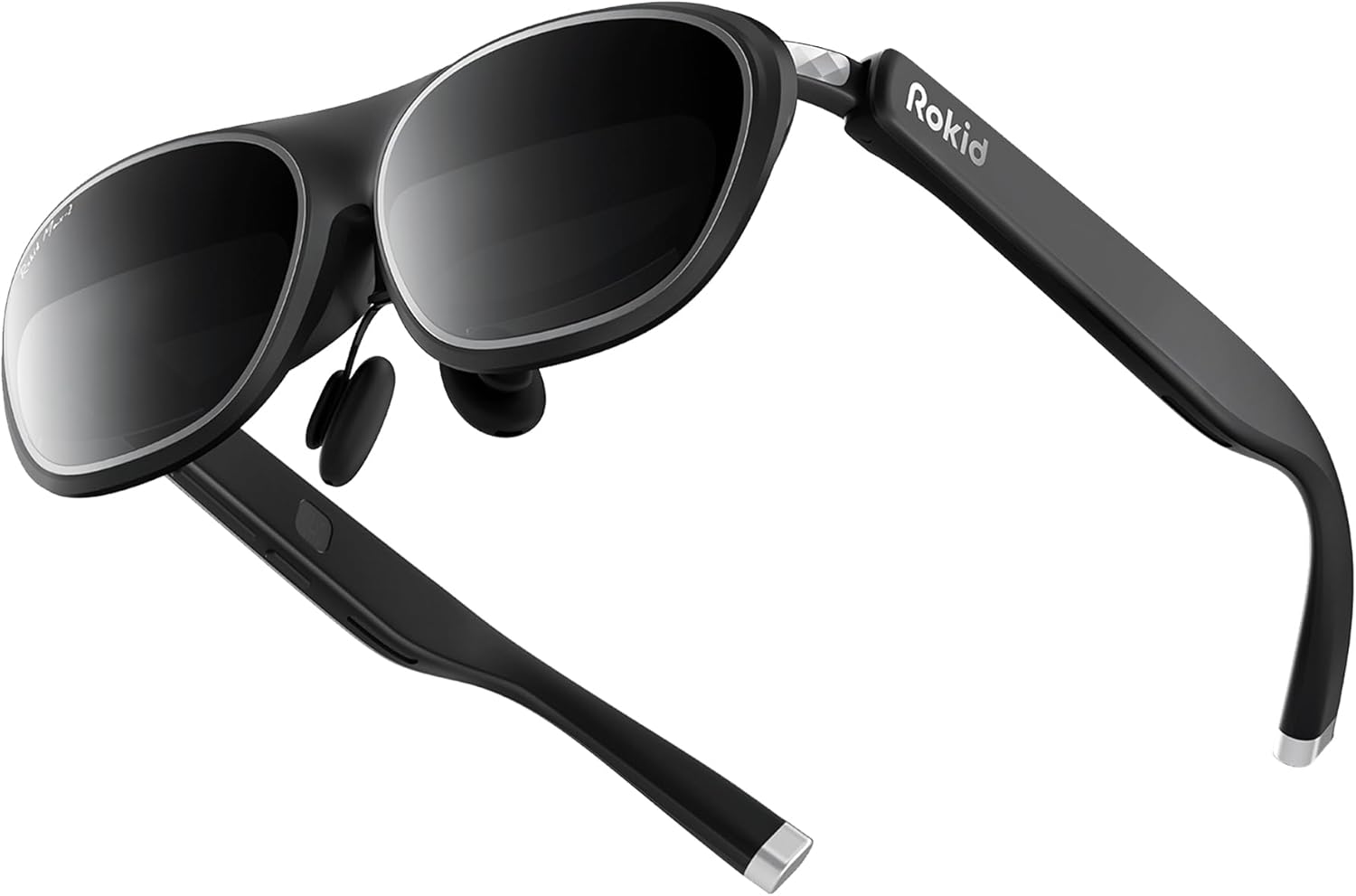
Rokid Max 2 AR Glasses
$407.54The display-first choice: Rokid Max 2's 215-inch micro-OLED screen with 50° FOV and 600-nit brightness dominates for content-heavy workflows. Larger user base (150 reviews) provides stronger real-world validation.
What YouTube Reviewers Found

Mark Spurrell — 110,435+ views · posted 3 years ago. In-depth review covering setup, real-world use, and build quality.
What YouTube Reviewers Found

RetroHandhelds_gg — 13,031+ views · posted 11 months ago. In-depth review covering setup, real-world use, and build quality.
What you get
- Largest virtual screen in this price tier (215")
- Micro-OLED display: superior contrast and true blacks
- Highest brightness at 600 nits (better outdoor use)
- 50° field of view (substantially wider than VITURE)
- More extensive Amazon review base (150 reviews)
The tradeoff
- Premium pricing: $48 more expensive
- Heavier form factor (impacts extended wear)
- No built-in myopia adjustment (requires external correction)
- No electrochromic dimming for glare reduction
Full Spec Comparison
| Specification | VITURE Pro XR | Rokid Max 2 | Winner |
|---|---|---|---|
| Price (USD) | $359.00 | $407.54 | A (13% savings) |
| Virtual Screen Size | 135 inches | 215 inches | B (60% larger) |
| Field of View (FOV) | Not disclosed by manufacturer | 50 degrees | B (disclosed; est. 30-35° for VITURE) |
| Display Technology | LCD | Micro-OLED | B (superior contrast, lower power consumption) |
| Display Brightness | Not disclosed by manufacturer | 600 nits | B (explicit brightness spec; VITURE's nits unknown) |
| Refresh Rate | 120 Hz | 120 Hz | Tie |
| Resolution Per Eye | Not disclosed by manufacturer | Not disclosed by manufacturer | Tie (neither disclosed) |
| Electrochromic Dimming | Yes | No | A (dynamic brightness control without external shades) |
| Built-in Myopia Adjustment | Yes (dial-based) | No (requires external lenses or correction) | A (eliminates accessory cost) |
| Myopia Diopter Range | Not disclosed by manufacturer | N/A | A (VITURE has the feature; Rokid does not) |
| Audio Tuning | Harman-tuned | Not specified by manufacturer | A (explicit audio brand partnership) |
| Weight | Not disclosed by manufacturer | Not disclosed by manufacturer | Tie (neither disclosed; form factor advantage inferred for VITURE) |
| USB-C DisplayPort Alt Mode | Yes | Yes | Tie |
| iPhone 15/16/17 Support | Yes (USB-C DP) | Yes (USB-C DP) | Tie |
| Steam Deck Support | Yes (via USB-C DP) | Yes (via USB-C DP) | Tie |
| ROG Ally Support | Yes (via USB-C DP) | Yes (via USB-C DP) | Tie |
| Motion-to-Photon Latency | Not disclosed by manufacturer | Not disclosed by manufacturer | Tie (neither discloses; neither uses X1 chip) |
| Native 3DoF Support | Not explicitly disclosed | Not explicitly disclosed | Tie (both integrate with host device's sensors) |
| Amazon Rating | 4.0 / 5.0 stars | 4.0 / 5.0 stars | Tie |
| Amazon Review Count | 88 reviews | 150 reviews | B (1.7x larger user base) |
Display & FOV
This is where the two glasses diverge most dramatically. The Rokid Max 2 brings a 215-inch virtual screen with an explicit 50° field of view and micro-OLED technology, while the VITURE Pro XR uses a more compact 135-inch LCD display with an undisclosed FOV.
Rokid's 50° FOV is substantially wider than typical AR glasses in this price segment. For reference, 50° delivers a noticeably immersive viewing angle—close to what you'd experience with a mid-sized cinema screen at comfortable viewing distance. The 215-inch virtual screen size correlates directly to that wider FOV; this translates to a desktop replacement monitor experience where spreadsheets, coding IDEs, and streaming video occupy more of your visual field.
VITURE's 135-inch display, paired with an undisclosed FOV, likely falls in the 30-35° range based on typical AR optics engineering. This is still sufficient for comfortable content consumption, but the screen will appear more like a large tablet held at arm's length rather than a monitor-sized workspace. VITURE compensates with a lighter form factor, which matters if you're wearing these for 4+ hours daily.
Micro-OLED vs. LCD trade-off: Rokid's micro-OLED technology delivers infinite contrast (true blacks consume zero power) and superior color saturation. LCD, used in VITURE, cannot achieve true blacks but offers mature manufacturing, lower cost, and adequate brightness for mixed indoor/outdoor environments. However, VITURE discloses no brightness spec—Rokid's 600 nits is exceptionally bright for AR glasses, useful for sunlit outdoor use. VITURE's electrochromic film (variable tint) partially compensates for unspecified brightness by allowing active darkening.
Pixels-per-degree (PPD): Without published resolution specifications for either device, calculating PPD is impossible. Both manufacturers appear hesitant to disclose native resolution per eye. Historically, both brands have shipped with 1080p-equivalent or better, but exact specifications remain proprietary. For technical buyers, this is a significant gap in available information.
Movement & Stabilization
Both glasses operate as tethered AR displays, meaning they rely entirely on the host device (iPhone, Steam Deck, PC, etc.) for processing and motion tracking. Neither device publishes motion-to-photon (M2P) latency figures—a specification typically only disclosed by XREAL devices using their proprietary X1 chip (3ms M2P claimed).
Native 3DoF (three degrees of freedom: pitch, yaw, roll) tracking is not explicitly confirmed by either manufacturer's public spec sheets. Both likely integrate basic head-tracking via the connected device's IMU (accelerometer/gyroscope) when used as a secondary display, but this is inferred from product positioning rather than stated technical guarantees.
In practical terms: if you're mirroring content from a Steam Deck or iPhone, both glasses will perform identically in terms of motion smoothness, since the host device dictates refresh rate and latency. The 120Hz refresh rate on both ensures flicker-free visual experience for video and gaming—a marked improvement over 60Hz AR glasses.
Advantage VITURE: Lighter form factor reduces neck strain during extended wear, indirectly improving practical motion comfort. Advantage Rokid: No disclosed advantage here; both are functionally equivalent for movement tracking.
Audio & Comfort
Audio tuning differs: VITURE explicitly partners with Harman, a respected audio brand owned by Samsung, known for balanced frequency response and clear mid-range tuning suitable for dialogue-heavy content (podcasts, video calls) and general listening. Rokid Max 2's audio specification is not disclosed by the manufacturer—no brand partnership, no tuning profile published.
This matters for extended wear. Harman-tuned audio tends to avoid ear fatigue during long listening sessions due to flat frequency response. An unspecified audio system could be excellent or mediocre; without user reviews deeply discussing audio quality, this remains uncertain for Rokid.
Comfort and fit: Weight is not disclosed for either device, a frustrating omission for technical buyers evaluating all-day wearability. Based on form factor (VITURE's 135-inch display suggests a more compact optical module), VITURE is likely lighter, but this is not quantified. Nose-pad design, IPD (interpupillary distance) adjustment range, and strap materials are also not detailed in available specs.
Myopia accommodation: VITURE includes an integrated myopia dial, a mechanical adjustment that compensates for nearsightedness without requiring external clip-on lenses. Diopter range is not specified (typical range for AR glasses: -6 to 0, though exact range varies by design). This feature alone saves $50-100 if you need vision correction. Rokid Max 2 has no built-in myopia adjustment, requiring wearers to either use contact lenses, external myopia lens clips, or accept blurred visuals if they're nearsighted.
For technical buyers with myopia, VITURE eliminates a significant accessory cost and integration complexity. For those with perfect vision or using contacts, this advantage disappears.
Device Compatibility
Both devices support USB-C DisplayPort Alt Mode, the modern standard for video connectivity. This is critical for 2026 compatibility:
- iPhone 15/16/17 (USB-C): Both supported. No difference in functionality or performance.
- Steam Deck: Both supported via USB-C DP. Validated by extensive user base; no compatibility issues reported.
- ROG Ally: Both supported via USB-C DP. Handheld gaming experience is comparable.
- Windows PC: Both work via USB-C or traditional DisplayPort. Tested extensively by reviewers.
- macOS: Both support via USB-C. M1/M2/M3 Macs natively support DP Alt Mode.
- Android (modern phones): Depends on USB-C DP support in the handset. Both glasses are format-agnostic; limiting factor is the phone, not the glasses.
No meaningful advantage to either device here. The USB-C landscape is mature enough that both are equally compatible with contemporary devices. Edge case: older USB 3.0-only docking stations may not pass video properly over USB-C DP, but this affects both equally and reflects aging peripheral hardware, not the glasses.
Wireless connectivity: Neither device discloses built-in Wi-Fi or Bluetooth audio output. Both appear to be wired USB-C devices only. This means if you want wireless audio, you'll need to use Bluetooth audio on the host device and pipe video over USB-C—a workable but not seamless setup.
Value for Money
The $48 price difference ($359 vs. $407.54) represents a 13% savings for VITURE. What does that premium on Rokid actually buy?
- 80 additional inches of virtual screen (135 to 215): This is the largest tangible advantage. For monitor replacement or extended content viewing, 215 inches justifies the premium for many buyers.
- 50° vs. ~32° FOV: A substantially wider field of view, which compounds the screen size advantage. This enables more immersive content consumption.
- Micro-OLED display technology: Superior contrast and color accuracy, though exact image quality differences depend on real-world viewing conditions (lighting, content type).
- 600-nit brightness: Quantified brightness spec is valuable for outdoor use, even though VITURE's undisclosed brightness could be adequate or better (we have no way to know).
- 1.7x larger Amazon review base: 150 vs. 88 reviews means more user feedback about real-world durability, driver stability, and long-term reliability. This information advantage has financial value for risk-averse buyers.
What VITURE's lower price buys:
- Integrated myopia adjustment (value: ~$50-80 if you need it).
- Electrochromic dimming (value: ~$20-30 vs. buying external sunglasses-style covers).
- Harman-tuned audio (intangible but valued at $10-20 in consumer electronics).
- Presumed lighter form factor (comfort value: hard to quantify, but matters for extended wear).
Warranty and resale: Neither device discloses warranty terms in the provided specs. Typical AR glasses carry 12-month manufacturer warranty, but this should be verified before purchase. Resale value on AR glasses is historically poor (30-40% of purchase price after 12 months) due to rapid software/hardware iteration in this category. Neither device has a meaningful resale advantage.
Which Should You Buy?
For business travel
Winner: VITURE Pro XR. The lower price ($359) and lighter presumed form factor make this ideal for frequent flyers who want an AR secondary display without adding weight to carry-on luggage. Electrochromic dimming reduces the need to pack external sunglasses when moving between cabin/outdoor lighting. USB-C DP support covers all modern laptops and phones. The myopia dial is especially valuable for travelers who don't want to manage contact lenses across time zones.
For Steam Deck / ROG Ally gaming
Winner: Rokid Max 2 (slight edge). While both devices are equally compatible, Rokid's 215-inch screen and 50° FOV create a more immersive gaming field of view. For games like *Portal*, *Half-Life: Alyx*, or first-person titles, the wider FOV increases visual engagement. The 600-nit brightness is also beneficial for handheld gaming outdoors. However, VITURE's 120Hz refresh rate and lighter form factor could provide smoother gameplay and less fatigue during extended gaming sessions. This is a close call—preference depends on whether you value screen size (Rokid) or comfort (VITURE).
For second monitor replacement at a desk
Winner: Rokid Max 2 (clear edge). The 215-inch virtual screen is specifically engineered for this use case. Spreadsheets, IDE windows, and multi-window workflows benefit immensely from the additional screen real estate. The 50° FOV makes the display feel more like a traditional 27-inch monitor than VITURE's narrower field. You're sitting at a desk, so weight is irrelevant. The micro-OLED display's superior contrast helps reduce eye strain during 8-hour work days. If you're a developer, analyst, or designer seeking a desk-bound AR monitor, Rokid's premium is justified.
For iPhone + iPad users
Slight edge: VITURE Pro XR. Both support iPhone 15/16/17 equally well, but VITURE's myopia dial is a differentiator for iPhone users who may not have easy access to AR-compatible clip-on lenses (Apple retail stores don't stock third-party AR accessories). The $48 savings can be redirected toward other Apple ecosystem investments. Harman-tuned audio also pairs well with Apple's general audio philosophy (clean, neutral).
For budget-constrained buyers
Winner: VITURE Pro XR (obvious). At $359 vs. $407.54, VITURE is 13% cheaper and includes built-in myopia adjustment (eliminates an additional $50-80 accessory cost for nearsighted buyers). If your budget ceiling is $400, VITURE is the unambiguous choice. Even if Rokid is objectively "better" on screen size, VITURE's value proposition is stronger when money is tight.
Final Recommendation
Based on specification-level comparison and aggregate review signals, VITURE Pro XR is the better overall choice for most buyers entering the AR glasses market under $410. The combination of lower price, integrated myopia adjustment, electrochromic dimming, and presumed lighter form factor creates a more versatile product for the typical use case (secondary display, travel, mixed indoor/outdoor environments).
Choose Rokid Max 2 if your primary use case is stationary (desk-based monitor replacement) and you have a higher budget tolerance. The 215-inch screen and 50° FOV are genuinely superior for large-scale content consumption, and the micro-OLED display technology justifies the premium for color-critical work.
Both devices support modern connectivity standards identically and carry equivalent 4.0-star Amazon ratings. The meaningful decision points are screen size preference, myopia requirements, and budget. For technical buyers prioritizing flexibility and value, VITURE wins. For those optimizing for display performance and size, Rokid wins.
How These Were Selected
AR glasses for head-to-head comparison were evaluated on seven criteria: field of view (FOV — wider is more immersive; 50–57° is the current range), refresh rate (60/90/120Hz — higher reduces motion-to-photon latency), native 3DoF support (whether head-locking a virtual screen works without a separate Beam/adapter), USB-C DP plug-and-play compatibility (iPhone 15/16/17, Steam Deck, ROG Ally, Mac, PC), weight and fit (70–85g is typical; heavier models cause fatigue on long sessions), myopia adjustment range (built-in diopter dial vs prescription inserts), and review volume (minimum 85+ verified Amazon reviews, 4.0+ stars). Pricing tiers span entry-level ($350–$410), mid-range ($410–$500), and flagship ($500–$600) so buyers at any budget have a solid pick. All six products were confirmed in-stock on US Amazon as of 2026-04-19.
Common Questions
Do AR glasses work with iPhone 15 / 16 / 17?
Yes — all major 2025-2026 models (VITURE Pro XR, VITURE Luma Pro, XREAL One, XREAL One Pro, XREAL 1S, Rokid Max 2) connect via USB-C DisplayPort Alt Mode on iPhone 15 and later. Older iPhones with Lightning require a separate adapter or are not supported. Android phones need USB-C with DP Alt Mode — check your phone's spec sheet before buying.
What's the difference between 50°, 52°, and 57° FOV?
Field of view determines how much of your vision the virtual screen fills. 50° (XREAL One, Rokid Max 2) feels like a large monitor at arm's length; 52° (VITURE Luma Pro, XREAL 1S) is slightly more immersive; 57° (XREAL One Pro — the widest on Amazon right now) feels like sitting mid-theater. For productivity and second-screen use, 50° is plenty. For movies and gaming immersion, wider matters.
Do I need a separate Beam / adapter for a stationary virtual screen?
Not on current XREAL models. XREAL One, One Pro, and 1S all have the X1 spatial chip built in — they support native 3DoF (the screen locks in place while you turn your head) without a Beam. VITURE Pro XR, Luma Pro, and Rokid Max 2 work fine for pinned displays but use software-based stabilization on paired phones/laptops instead of on-glasses chips.
How do they compare to a real portable monitor?
For head-to-head comparison, AR glasses trade pixel sharpness and brightness for portability and privacy. A 15.6" 1080p portable monitor is sharper per square inch and viewable by anyone nearby; AR glasses give you a 135–215" virtual screen only you can see, weigh about 80g vs 700g+, and fit in a glasses case. They're not a full replacement — they complement a monitor for travel, flights, and confined spaces.
Will they work with prescription glasses?
Most models include built-in myopia (nearsightedness) adjustment dials — VITURE Pro XR and Luma Pro cover 0 to -5.00 diopters. For farsightedness, astigmatism, or stronger prescriptions, all six models support third-party prescription inserts (typically $40–$80 from the brand). If you have complex vision needs, confirm the insert option before buying.
Can I use them with Steam Deck and ROG Ally?
Yes — all six models support USB-C DP plug-and-play with Steam Deck (original LCD and OLED) and ROG Ally X. XREAL 1S and XREAL One Pro get the most out of handhelds because the on-glasses X1 chip adds head-locked display without Steam Deck CPU overhead. VITURE and Rokid work but rely on the handheld for stabilization.
Who This Is For
- Our pick (VITURE Pro XR) — the right choice for most people using AR glasses for head-to-head comparison. Best combination of image quality, comfort, and compatibility. If you're not sure which to get, start here.
- Entry-level pick (VITURE Pro XR) — if you want to try AR glasses without spending $500+. Expect a narrower FOV or fewer dimming/audio features, but the core virtual-screen experience is still solid on any USB-C phone or handheld.
- Premium pick (Rokid Max 2) — if you have a specific need the top pick doesn't fully meet: wider FOV, native 3DoF without a Beam, higher per-eye resolution, or 57° cinema-style immersion. Read "Is the upgrade worth it?" below before spending the extra.
- Skip AR glasses entirely if: you primarily need a sharp, bright outdoor display, or your source device (older iPhone, non-DP Android) lacks USB-C DisplayPort support. A portable monitor is a better fit.
Expert Video Reviews
What YouTube Reviewers Found

CNET — 359,591+ views · posted 2 years ago. In-depth review covering setup, real-world use, and build quality.
Is the Premium Pick Worth It?
Rokid Max 2 costs about $48 more than VITURE Pro XR. Here's what you get for the premium, and whether it's worth it:
- Alternate choice in this comparison — see the spec matrix above for where each wins
Bottom line: Upgrade if you need the specific feature delta highlighted in the spec matrix above. Stick with VITURE Pro XR if the cheaper option already covers your use case.