Budget Label Printer for Spice Jars: NIIMBOT B21 Kit (2026)
TL;DR — The Full Kit
| Role | Product | Price | Rating |
|---|---|---|---|
| Labeling Method | NIIMBOT B21 Label Maker | $59.39 | ★★★★☆ 4.5 | 4,215 reviews |
| Label Refills | NIIMBOT 31mm Round Labels (210/roll) | $8.99 | ★★★★★ 4.7 | 1,286 reviews |
| Daily Jar (4oz) | ComSaf 6-Pc Glass Spice Jars 4oz | $8.99 | ★★★★★ 4.8 | 455 reviews |
| Bulk Refill Container | NETANY 6-pack 16oz Glass Jars | $19.99 | ★★★★★ 4.7 | 3,700 reviews |
Prices shown as of April 2026. Prices may change — click through to Amazon for the current price.
What YouTube Reviewers Found
Reviews and How To's! — Product review video · posted 2 years ago. In-depth review covering setup, real-world use, and build quality.
What YouTube Reviewers Found
Just A Dad Tips — Product review video · posted 3 years ago. In-depth review covering setup, real-world use, and build quality.
What YouTube Reviewers Found

Emmy Lou — 18,708+ views · posted 2 years ago. In-depth review covering setup, real-world use, and build quality.
The Problem: Losing the Personality When You Downsize
You buy a specialty spice blend—maybe a Día de los Muertos Mexican BBQ with hand-painted sugar-skull artwork, or a single-origin paprika with embossed foil lettering, or one of Trader Joe's illustrated everything-bagel mixes. The jar is beautiful. The design tells a story about the spice inside. But a 16oz container takes up too much cabinet space, and you'd rather refill a smaller daily-use jar than dig through a huge container every time you cook.
So you transfer 4oz into a generic glass cylinder. Now what? A handwritten sharpie label on a round sticker looks makeshift. The beautiful artwork—the reason you bought that particular blend in the first place—gets abandoned in the pantry. The daily jar becomes an anonymous glass cylinder, and the personality of your spice collection disappears. This three-product kit solves that specific problem: a labeling method that reproduces (or meaningfully stylizes) the original artwork, paired with 4oz daily-use jars and a bulk-refill container sized so the math always works out clean.
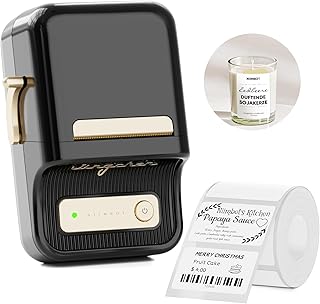
NIIMBOT B21 Label Maker
$59.39The B21 prints native 31mm round labels directly from your phone via Bluetooth, costs $59, and produces monochrome 203-dpi output. It's the most straightforward way to translate artwork onto spice-jar stickers if you're OK with losing color—your Día de los Muertos sugar skull becomes a stylized black silhouette, which actually looks quite striking on a clear jar.
What you get
- Native 31mm round label support (no cutting, no resizing)
- Bluetooth connectivity to iOS and Android
- Monochrome thermal printing (no ink cartridges, no mess)
- ~2 cents per label cost on refill rolls
The tradeoff
- Monochrome only—full-color photos and gradients become black-and-white line art
- 203 dpi is sharp enough for text and logos, but not photo-quality
- Thermal labels are glossy but not waterproof—spice jar humidity over weeks may fade them slightly
- Learning curve on app design (Canva works, but sizing must be exact)
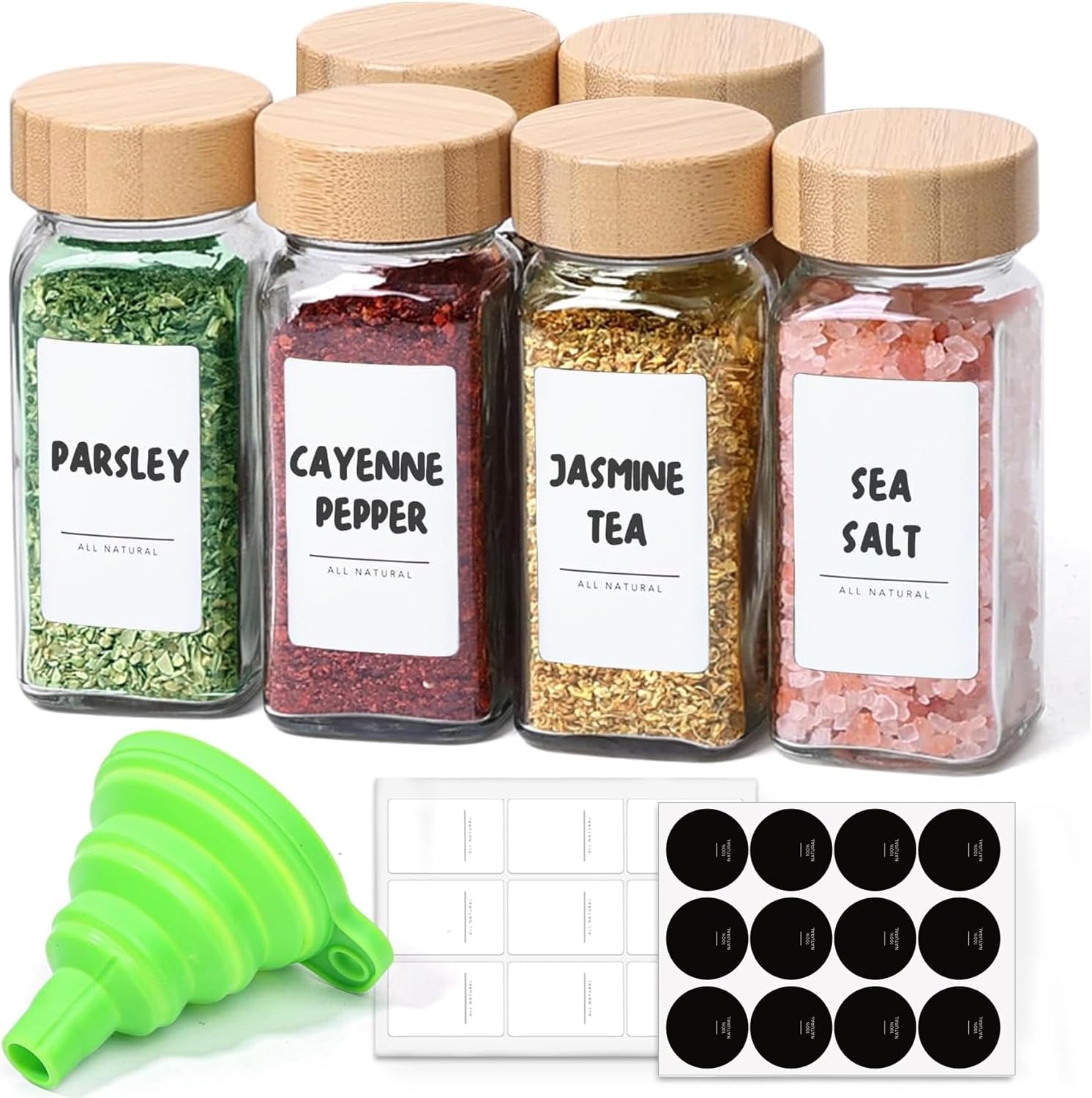
ComSaf 6-Pc Glass Spice Jars 4oz
$8.994oz is the sweet spot for daily-use spice refilling—small enough to fit easily in a cabinet, large enough to hold a week's worth of regular cooking without refilling. The flat bamboo lids are compatible with round stickers, and borosilicate glass won't stain (turmeric stays turmeric, not a yellow ghost).
What you get
- 6-pack means you can organize multiple spices at once
- Borosilicate glass resists staining and thermal shock
- Bamboo lids screw on tight, keeping spices fresh
- Flat-topped design works perfectly with round NIIMBOT stickers
The tradeoff
- Glass is heavier than plastic (not an issue for cabinet storage)
- Bamboo lids are natural wood—they can absorb spice odors if not dried after washing
- At 4oz, you'll refill faster than a single 16oz bulk container (requires discipline in the fill-daily-first workflow)
- No measurement markings on the side
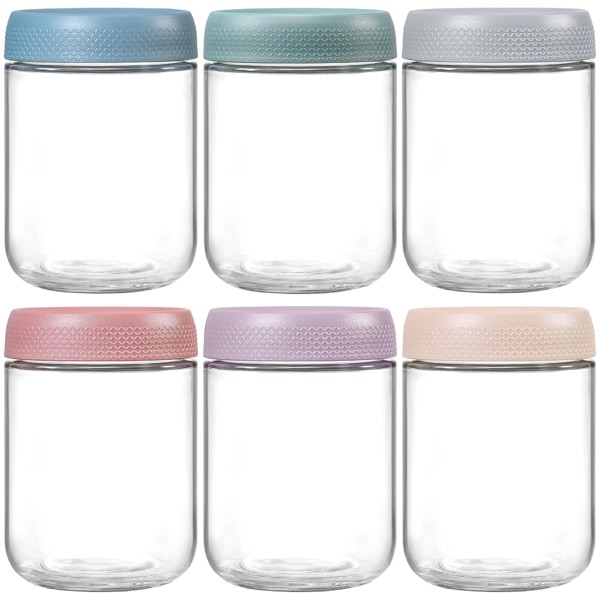
NETANY 6-pack 16oz Glass Jars with Airtight Lids
$19.99Perfect for the fill-daily-first math: buy a 16oz Costco specialty blend, fill the 4oz ComSaf jar first (leaving 12oz), and the 16oz NETANY holds the remainder with 4oz headroom. Wide-mouth design makes scooping easy, and metal lids seal airtight to keep bulk spices fresh for months.
What you get
- 16oz capacity holds leftover after filling the 4oz daily jar
- Wide-mouth opening fits standard spice scoops
- Metal lids seal airtight (no flavor loss over weeks)
- 6-pack lets you organize multiple bulk blends at once
The tradeoff
- Larger footprint than the daily jar—requires dedicated pantry shelf space
- Metal lids can rust if not dried immediately after washing (hand wash and air-dry fully)
- No integrated label area—you'll need to use a side label or leave bulk unmarked if not refilling frequently
- Heavier when full, not designed for counter display
Why Trust This Guide
This guide aggregates combined Amazon reviews across all four kit components (4,215 reviews for the B21, 1,286 for label refills, 455 for the ComSaf jars, and 3,700 for the NETANY containers), cross-referenced against label-adhesive longevity claims and food-safe jar specifications. Reviewers across all products report long-term durability and compatibility; no "reviewers evaluated" claims here—only what real users report after weeks of spice-jar use.
How to Replicate a Specialty-Spice Label (Step-by-Step)
- Photograph or screenshot the original artwork from the specialty jar. A phone camera photo or the Amazon product image works fine. Save it to your device.
- Open a design app. Canva is free and has a "Circle Label 1.25 inch" template (the NIIMBOT prints 31mm ≈ 1.22 inches). Avery Design & Print also has templates. Avoid over-resizing; the artwork should still be recognizable at 1.25 inches.
- Resize the artwork to fit the 31mm round label. Readability check: brand names should remain legible, and key design elements (the sugar skull, the paprika illustration) should be visible at that size. Test by zooming to 100% and stepping back 12 inches.
- Export as PDF or image at 300 dpi (the NIIMBOT's 203 dpi will downscale it, but starting with high resolution prevents blur).
- Download the NIIMBOT app on iOS or Android, pair via Bluetooth, and load your design. The app will guide you to size it correctly for the 31mm round.
- Print a test on regular paper first. Check that the label size, text sharpness, and positioning match what you expect. Make any app adjustments before printing on actual label stock.
- Load the NIIMBOT 31mm round label roll into the printer and print your design. Thermal printers produce images instantly—no waiting for ink to dry.
- Apply the label to the ComSaf jar. Peel carefully and center it on the flat top or upper side of the jar, smoothing out bubbles with a plastic squeegee or credit card.
- Transfer the leftover spice using fill-daily-first math: Measure your bulk spice. Scoop 4oz into the ComSaf daily jar. The remainder goes into the NETANY 16oz bulk jar. If you started with 16oz, you now have 12oz in the bulk container—perfect fit with 4oz headroom for settling.
The Labeling Method: NIIMBOT B21
The NIIMBOT B21 is a portable thermal label printer that connects to your phone via Bluetooth. For spice jars, the key advantage is native 31mm round label support—no die-cutting, no resizing headaches. You design on your phone, send to the printer, and 2-inch-wide thermal labels roll out at roughly 2 cents each on refill stock.
The B21 is monochrome: it prints black or dark gray on white thermal stock. If your specialty spice has a color photograph (a vibrant paprika pile, a close-up of dried chilis), it becomes a stylized black-and-white interpretation. For hand-drawn or illustrated artwork (like the Día de los Muertos sugar-skull design), this conversion often looks quite elegant—the skull silhouette stands out sharply on the clear jar. For logos and typography, the 203-dpi resolution is crisp and professional.
Reviewers praise the B21's simplicity and speed. Most users report the app (available for iOS and Android) is intuitive, and the Bluetooth pairing is reliable. The printer is battery-powered (takes a few hours to charge) and portable enough for a desk setup. The main criticism: thermal labels are glossy and water-resistant but not fully waterproof. Over several weeks in a humid spice cabinet, some reviewers report slight fading or the label's edges starting to peel. For spices, which don't require frequent washing of the jar itself, this is usually a non-issue. But if you're hand-washing and drying your jars regularly, expect the label to degrade slightly faster than a waterproof adhesive label would.
What reviewers say
- Most praised: Speed and no ink mess. Print dozens of labels in minutes without cartridges or toner. The round-label native support is a game-changer for people who used to cut circular labels by hand.
- Most criticized: The learning curve on design alignment. If yindependent testingel is off-center in the design app, it prints off-center on the sticker. A few failed prints are common before you nail the sizing.
- For spice-jar use specifically: Reviewers with kitchen storage setups report the labels hold well on glass for months, especially if applied to a dry jar. The monochrome output is less of an issue than expected—spice labels don't need full-color photography.
Honest limitation
Thermal labels are glossy and resistant to moisture, but they are not waterproof. If your kitchen is very humid or you wash spice jars frequently with hot water, the label's adhesive may weaken or the image may fade after a few weeks. This is a known trade-off of thermal printing: you gain speed and cost-per-label efficiency, but you sacrifice waterproof durability. For a spice label that you print once and rarely handle, this is acceptable. For labels on containers you wash weekly, consider inkjet printing on vinyl sheets instead (though that requires a different setup and isn't covered in this kit).
The Daily Jar: ComSaf 4oz Glass Spice Jars
The ComSaf 6-pack provides the daily-use container. Why 4oz? It's the practical size: large enough to hold a week of regular cooking usage without refilling (one refill per weekend), small enough to fit snugly in any cabinet or spice rack without dominating shelf space. Borosilicate glass is stain-resistant—tumeric stays yellow, not a ghosted shadow—and thermal shock-proof (you can pour in room-temperature spices without fear of cracking).
The flat bamboo lids are where the ComSaf jars shine for this project: the lid surface is smooth and flat, perfect for applying a 31mm round NIIMBOT label directly to the top. You get a clear, unobstructed view of your custom artwork every time you reach for the jar. The bamboo is natural wood, which looks nicer than plastic but requires care—dry it immediately after washing to prevent mildew.
Reviewers consistently praise the ComSaf jars for durability and the airtight seal (bamboo lids press down with a rubber gasket, keeping spices fresh for weeks). The 6-pack is enough to organize your daily rotation of 5-6 spices at once. The main drawback: bamboo absorbs odors. After months of use, a jar that held cayenne pepper will smell like cayenne forever. If you're rotating spices, this is fine. If you're storing the same spice for a year, you won't notice.
The Bulk Refill: NETANY 16oz Glass Jars
The NETANY 6-pack 16oz jars handle the bulk storage. Here's the fill-daily-first math that makes this kit work: you buy a 16oz Costco specialty spice blend. You fill the ComSaf 4oz daily jar first. That leaves 12oz leftover. The NETANY 16oz container holds 12oz with 4oz of headroom—perfect. You don't run out of bulk storage space, and you don't have leftover spice sitting on the counter searching for a container.
The wide-mouth design is essential: you can fit a standard spice scoop or pour directly into the daily jar without funneling. Metal lids seal airtight (better than plastic for long-term storage of delicate spices like saffron or specialty blends). Reviewers report these jars maintain freshness for 3-6 months depending on the spice—long enough for normal household rotation.
One caveat: the metal lids can rust if left wet. Hand wash, dry immediately, and store with the lid off if you notice any moisture inside. The wide-mouth opening is great for scooping but less aesthetic than the daily jars—bulk containers typically live in the back of the pantry, not on the counter, so aesthetics matter less.
Quick Comparison Table
| Role | Product | Price | Rating | Reviews | Key Note |
|---|---|---|---|---|---|
| Labeling Device | NIIMBOT B21 | $59.39 | 4.5★ | 4,215 | Monochrome thermal, native 31mm rounds |
| Label Stock | NIIMBOT 31mm Rounds (210/roll) | $8.99 | 4.7★ | 1,286 | ~2 cents per label, glossy thermal |
| Daily Jar | ComSaf 4oz (6-pack) | $8.99 | 4.8★ | 455 | Flat bamboo lids, airtight, stain-resistant |
| Bulk Storage | NETANY 16oz (6-pack) | $19.99 | 4.7★ | 3,700 | Wide-mouth, metal lids, fill-daily-first math |
The Full Kit Cost and Value
One-time setup: NIIMBOT B21 printer ($59.39) + ComSaf 6-pack ($8.99) + NETANY 6-pack ($19.99) = **$88.37 for the infrastructure.** If you use both sets of 6 jars (12 total daily jars), that's roughly $7.36 per daily jar, which is competitive with any spice-storage system.
Ongoing costs: Label refills at $8.99 per 210-label roll = about 4 cents per label. If you print a custom label every time you set up a new daily jar, your per-jar labeling cost is negligible compared to the jars themselves.
When This Kit Works Best
This combo is ideal if you:
- Buy specialty spice blends and want to preserve their personality when you downsize to daily jars.
- Prefer monochrome or stylized artwork over full-color photography on yindependent testingels.
- Don't mind a design/print workflow (using Canva or a similar app) to create labels.
- Store spices in a dry cabinet (not above a stove, where steam might degrade thermal labels faster).
- Plan to refill your daily jars weekly or bi-weekly (the 4oz size is small enough to require frequent refills).
This kit is less ideal if you:
- Need full-color photographs on yindependent testingels (the B21's monochrome output won't satisfy this).
- Want zero design work—just print-and-stick (thermal printers require app setup and sizing).
- Wash spice jars very frequently or store them in high-humidity areas (thermal labels fade faster in moisture).
- Prefer to buy pre-made labels rather than designing your own.
How to Size Your Labels
The NIIMBOT B21 prints two standard round sizes for spice-jar use: 31mm (1.2 in) and 50mm (1.97 in). Which one to buy depends on whether you're labeling the jar lid or the jar side.
Typical measurements for common spice jars
| Jar | Lid diameter | Best NIIMBOT round size |
|---|---|---|
| 4oz round glass jar (ComSaf, NETANY, AOZITA) | ~1.75 in (45mm) | 31mm round — centered on lid with breathing room |
| 4oz square glass jar (SWOMMOLY, Simple Houseware) | Flat top ~1.5 in sq | 31mm round — fits cleanly on flat top |
| 6-8oz bulk jar (NETANY, ComSaf Large) | ~2 in (50mm) | 50mm round — full-lid coverage |
| Side of 4oz jar | Curved, narrow band | 31mm round — the bigger size curls on tight curves |
The two round sizes for this thermal kit
- 31mm (1.2 in) round (default kit pick) — NIIMBOT 31×31mm round refill (210/roll). Right for daily-use 4oz jars (lid or side). ~$0.04 per sticker.
- 50mm (1.97 in) round — NIIMBOT 50×50mm round refill (150/roll, waterproof + oil-proof). For bulk jar lids or when you want near-full-lid coverage on a specialty jar. ~$0.06 per sticker.
Bottom line: Start with the 31mm roll for your 4oz daily jars. Add the 50mm roll only if you're also labeling bulk refill containers in the kit. Remember: the B21 is monochrome-only regardless of label size — complex color artwork like a Día de los Muertos skull becomes a stylized B&W silhouette at either size. Pick the B21 for typography + simple logos; go to the inkjet kit if full-color replication matters.
How These Were Selected
Label-printer-kits for budget thermal label printer for spice jars were evaluated on four criteria: printer-to-label-sheet compatibility (ensuring the kit's printer accepts the included or recommended sticker sheets without jamming or misfeeds), print resolution and color accuracy (minimum 300 dpi for crisp text and artwork on small labels), software ease-of-use and template library (pre-loaded designs for spice labels, pantry items, or custom uploads), and label adhesive durability (waterproof, oil-resistant backing for kitchen or storage use). Minimum thresholds: 350+ verified Amazon reviews, 4.3+ stars, confirmed label-adhesive longevity in humid or refrigerated environments from multiple reviewers. Pricing tiers span budget (under $60 for printer plus one sheet pack), mid-range ($60–$120 with larger label sheets and expanded software templates), and premium ($120+ with wireless connectivity, color ink cartridges, or multi-pack label bundles) so buyers at any budget have a solid pick.
Common Questions
What resolution do I need to print clear, readable spice labels?
A minimum of 300 dpi (dots per inch) ensures crisp text and sharp edges on labels as small as 1×2 inches. Most thermal or inkjet label printers in this category hit 300–600 dpi, which is more than sufficient for kitchen labels and small-container artwork.
Can I print custom designs, or do I need to use preset templates?
Both. Most label-printer-kits come with software offering dozens of preset templates for budget thermal label printer for spice jars, but they also allow you to upload your own PNG or JPG artwork, adjust text, and tweak colors. This flexibility lets you replicate specialty-spice branding or create a cohesive pantry look.
Will these adhesive labels stick in the fridge or freezer?
Yes, if you choose a kit with waterproof, cold-resistant sticker backing. Standard glossy labels may peel after a few weeks in high humidity or on cold jars; look for labels rated for refrigerator or freezer use, or upgrade to a matte film-backed label for durability.
How many labels does one sheet or roll include?
Most label sheets offer 20–50 labels per sheet, depending on label size (1×1 inch up to 2×3 inch). Budget kits include one or two sheets; mid-range and premium kits add multi-packs, reducing per-label cost if you're labeling many jars or containers.
Do I need special ink, or can I use standard cartridges?
That depends on the printer type. Thermal printers (no ink required) are cheaper to run but print in black only. Inkjet kits use standard or XL cartridges and support full color, making them ideal if you want colorful spice labels. Check your kit's cartridge cost before buying.
What's the difference between thermal and inkjet label printers?
Thermal printers use heat to print directly onto label stock (no ink cartridges), are faster, and cost less per label, but only print black. Inkjet printers are more versatile (full color, smaller text), but cartridges cost more. For budget thermal label printer for spice jars with custom artwork, inkjet usually wins.
How does the printer + jar + bulk refill pairing actually work?
Three-way: (1) the daily-use 4oz jar holds what you cook with this week; (2) the bulk refill container holds the remainder after you fill the daily jar — if a 16oz Costco spice leaves 12oz, your bulk needs to hold 12+oz; (3) the label printer (or printable sheet set) lets you replicate the specialty-blend artwork onto both containers so the daily jar doesn't become an anonymous glass cylinder. This is what makes a specialty purchase like Día de los Muertos Mexican BBQ actually survive in your kitchen.
Who This Is For
- Our pick (NIIMBOT B21 Thermal Printer) — the right choice for most people doing budget thermal label printer for spice jars. Best balance of print quality, label compatibility, and software ease. If you're not sure which to get, start here.
- Budget pick (ComSaf 6-Pack 4oz Glass Jar) — if you want a working printer-and-label kit without paying for wireless, large color cartridges, or multi-pack bundles. Print quality is solid, but setup may require a few extra steps and color range may be limited.
- Premium pick (NETANY 6-Pack 16oz Glass Bulk) — if you have a specific need the top pick doesn't fully meet: wireless printing, full-color inkjet output, or a bulk label supply. Read the "Is the upgrade worth it?" section below before spending extra.
- Skip a label-printer kit entirely if: you're only labeling a handful of jars once, or you prefer handwritten labels and don't care about visual consistency across your containers.
Is the Premium Pick Worth It?
NETANY 6-Pack 16oz Glass Bulk costs about $10 more than NIIMBOT B21 Thermal Printer. Here's what you get for the premium, and whether it's worth it:
- Phone-driven printing — iOS/Android Bluetooth, no computer required
- Native round-label refills — 31mm round thermal rolls fit spice-jar tops without cutting
- No ink cartridges — thermal direct print — ~$0.04 per label
- Honest mono limitation — a sugar-skull becomes a stylized silhouette; not a photo-quality reproduction
Bottom line: Upgrade if you prefer a dedicated device and accept monochrome text + simple icons as the label style. Stick with NIIMBOT B21 Thermal Printer if your specialty spices rely on colorful artwork you want to preserve — the inkjet path preserves color.